
×
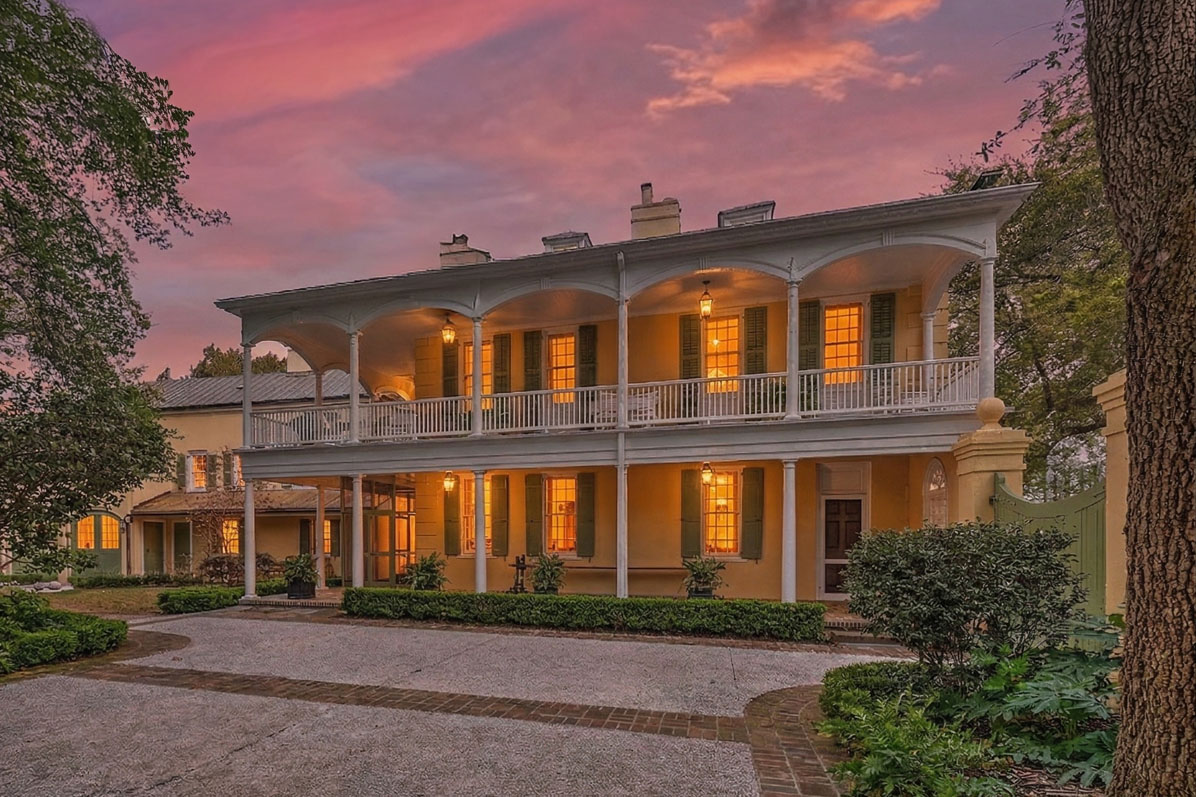
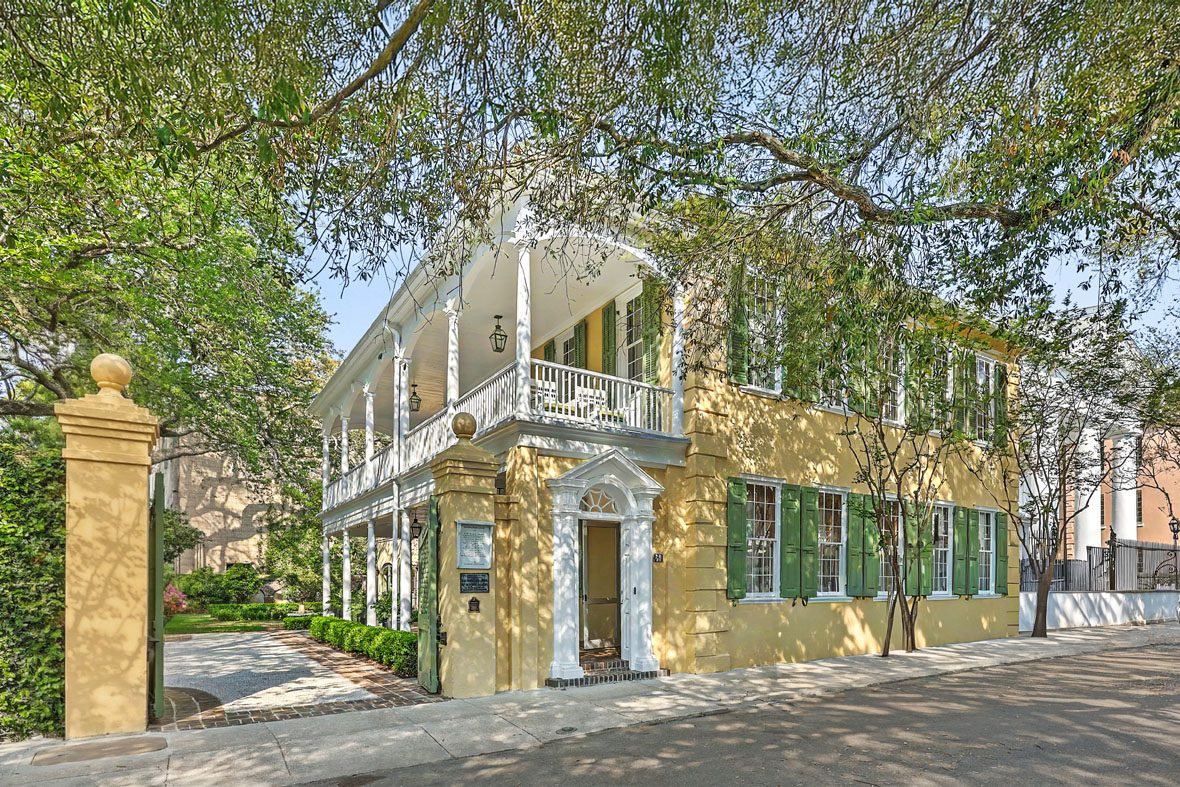



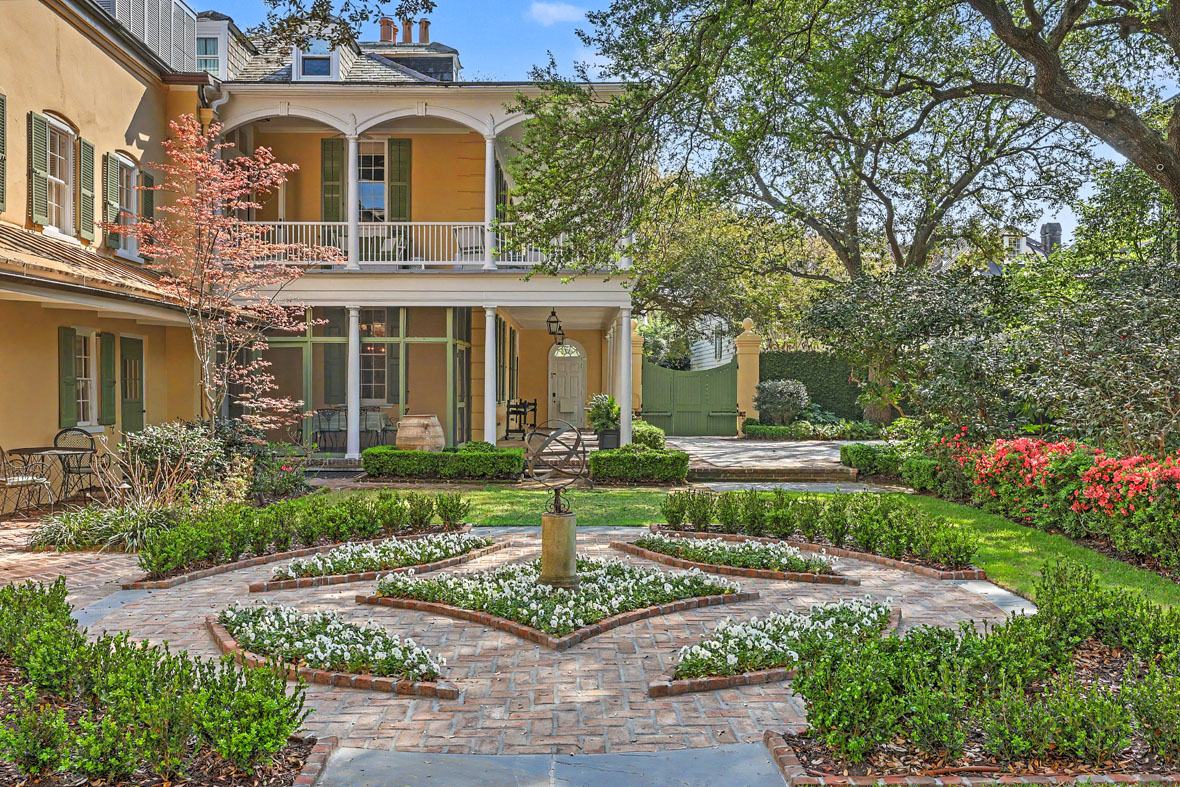
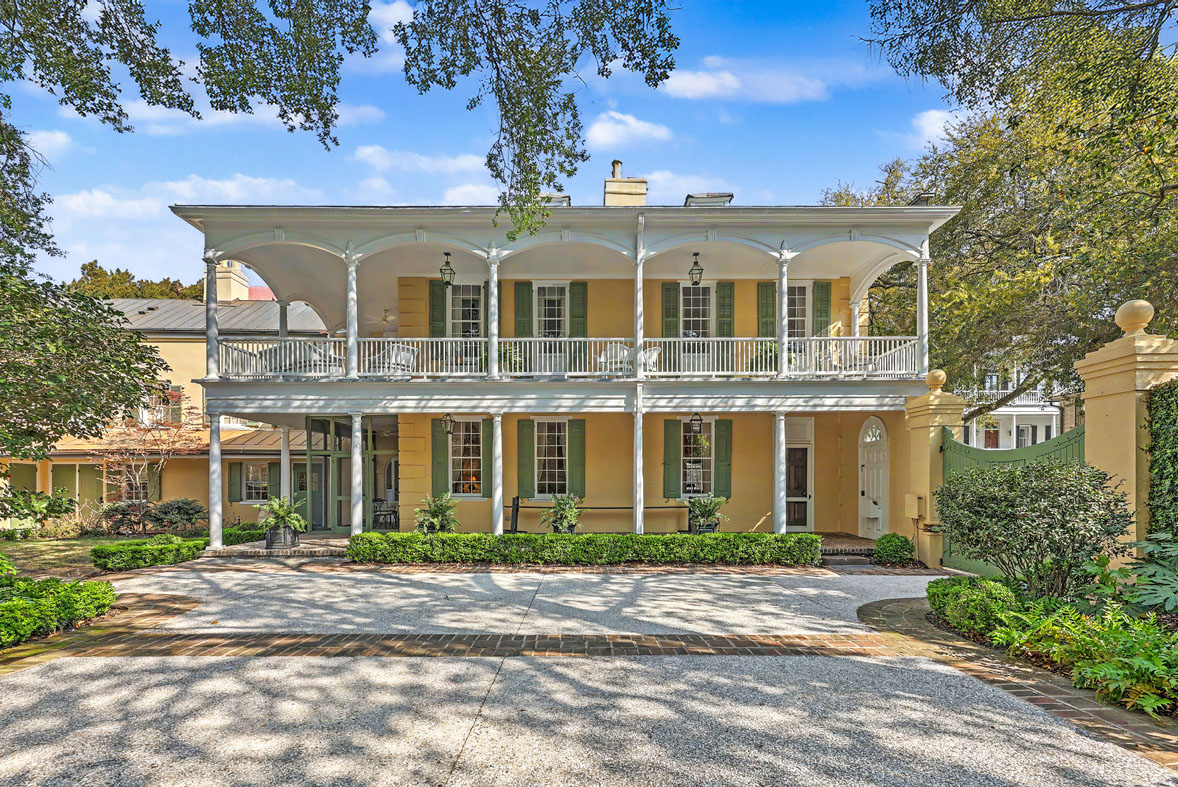
On one of the most beautiful streets in historic downtown Charleston, behind garden walls and beneath the shade of live oaks, stands the Thomas Rose House: an extraordinary Georgian residence built in 1735 when Charles Town was still a young Colonial port. For nearly 300 years, this remarkable home has witnessed the evolution of the Holy City—surviving devastating fires, wars, earthquakes, and storms—while retaining its elegant architecture and inimitable craftsmanship. Today, following a meticulous restoration that seamlessly blends historic integrity with modern luxury, this South of Broad estate offers something almost impossible to replicate: a fully livable 18th-century masterpiece set within expansive gardens in the heart of America’s most beautifully preserved historic city.

Few homes in Charleston embody the city’s history, architecture, and spirit of preservation as completely as the Thomas Rose House. It stands on historic Church Street on land that has been part of the city’s story since its earliest days. The property occupies Lot 61 of the original Grand Modell of Charles Town. In 1680, the Lords Proprietors granted the plot to Elizabeth Willis—one of only a few early grants issued to a woman. By 1701, it had passed to the Elliott family. Patriarch Thomas Eliott was one of the wealthiest men and largest landowners in the colony at the time. He fathered 18 children and upon his death in 1731, bequeathed each of his sons a plantation and each daughter a town house. 59 Church Street was granted to his 18-year-old daughter Beuler. In 1733, she married Thomas Rose, who soon thereafter commissioned the construction of the distinguished house that still bears his name today.
From the beginning, Rose intended his residence to reflect the fashionable architecture of England’s port cities. In a surviving 1734 letter, he requested English bricklayers be sent to Charleston to assist in building the home. The result was an elegant Georgian merchant house constructed of brick and oyster-shell plaster. The two-and-a-half-story residence is 5 bays wide with a hipped roof punctuated by dormers. The original floor plan was more of a double house, with a central entrance on Church Street and an iron balcony above. The full-width drawing room spanning the front of the second floor is believed to be the earliest surviving example of this layout in the city. It survives today in all its original grandeur.
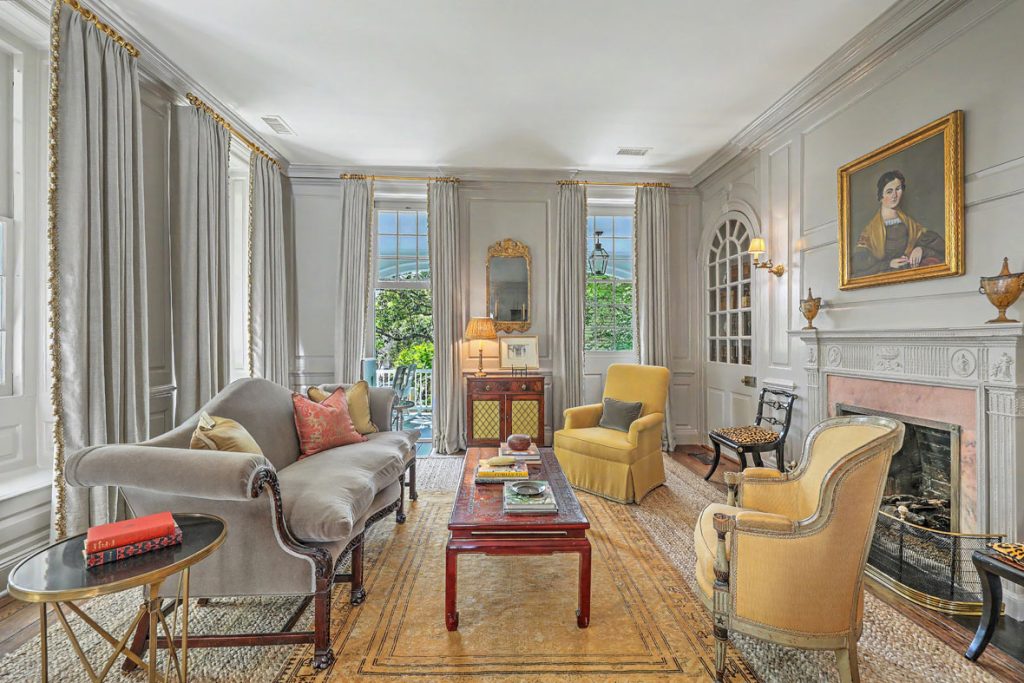
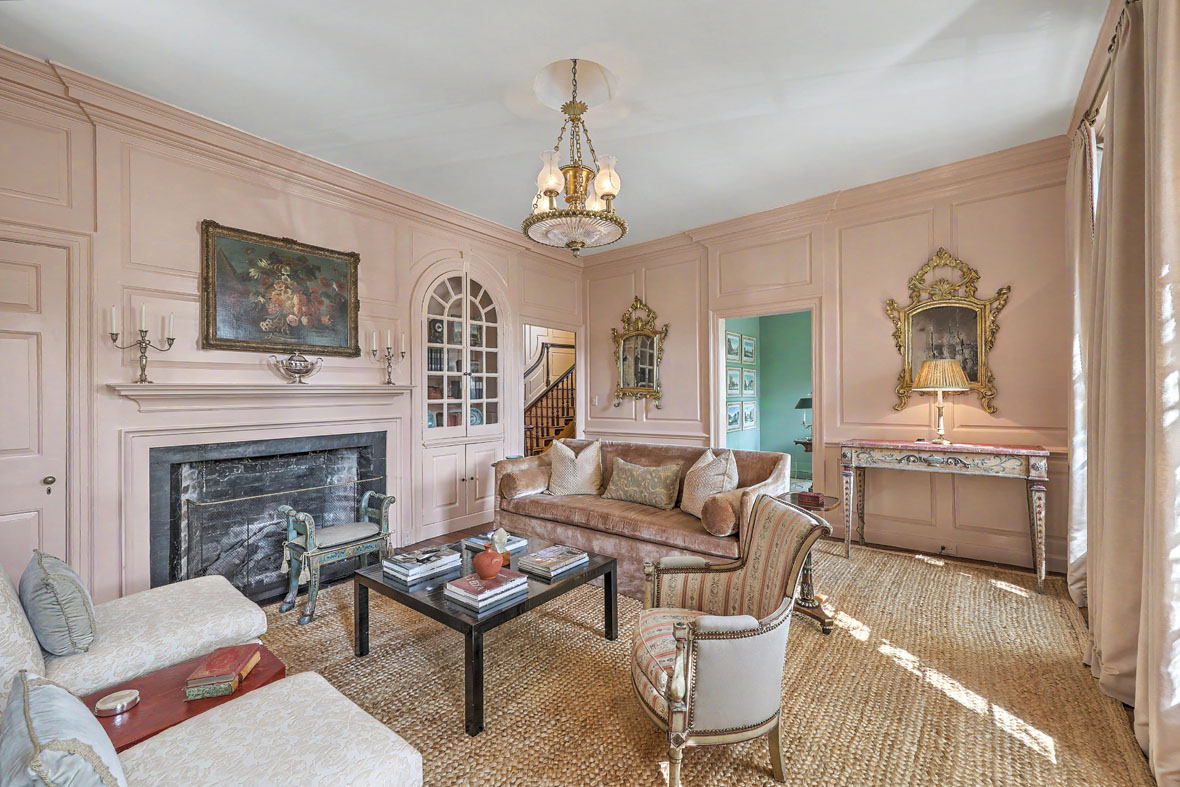
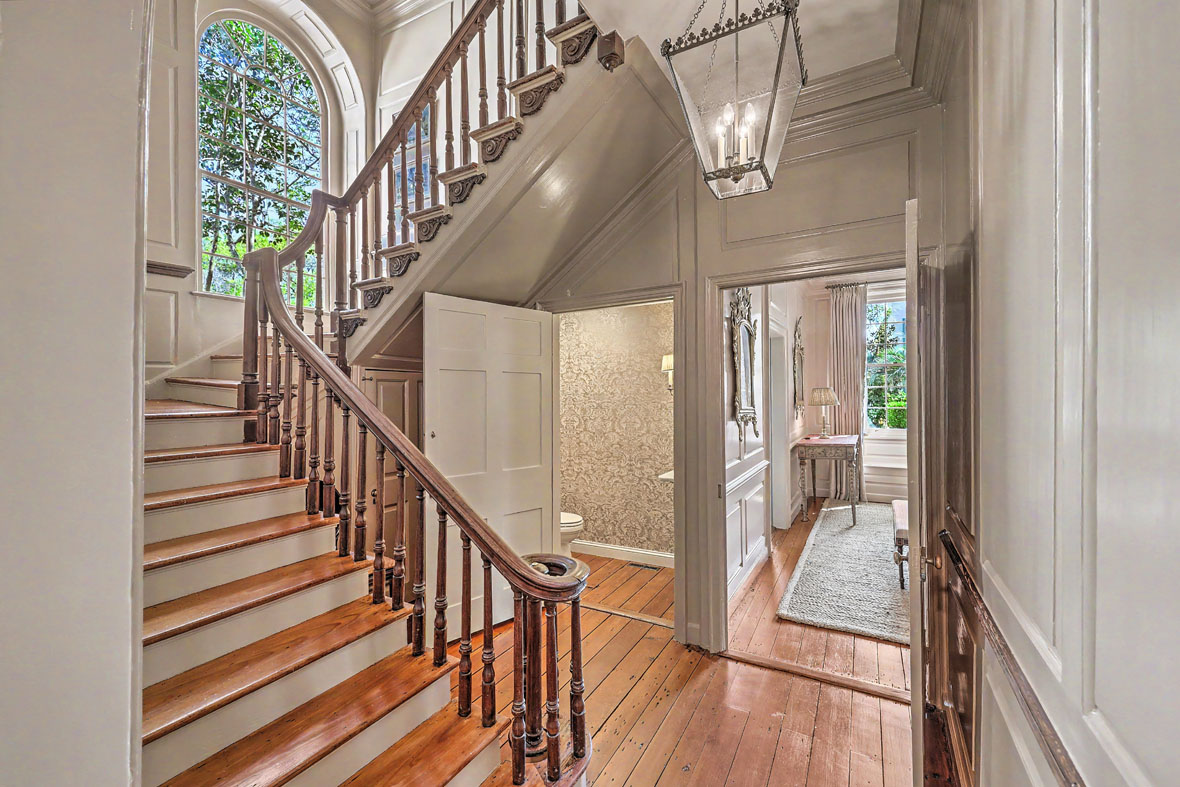
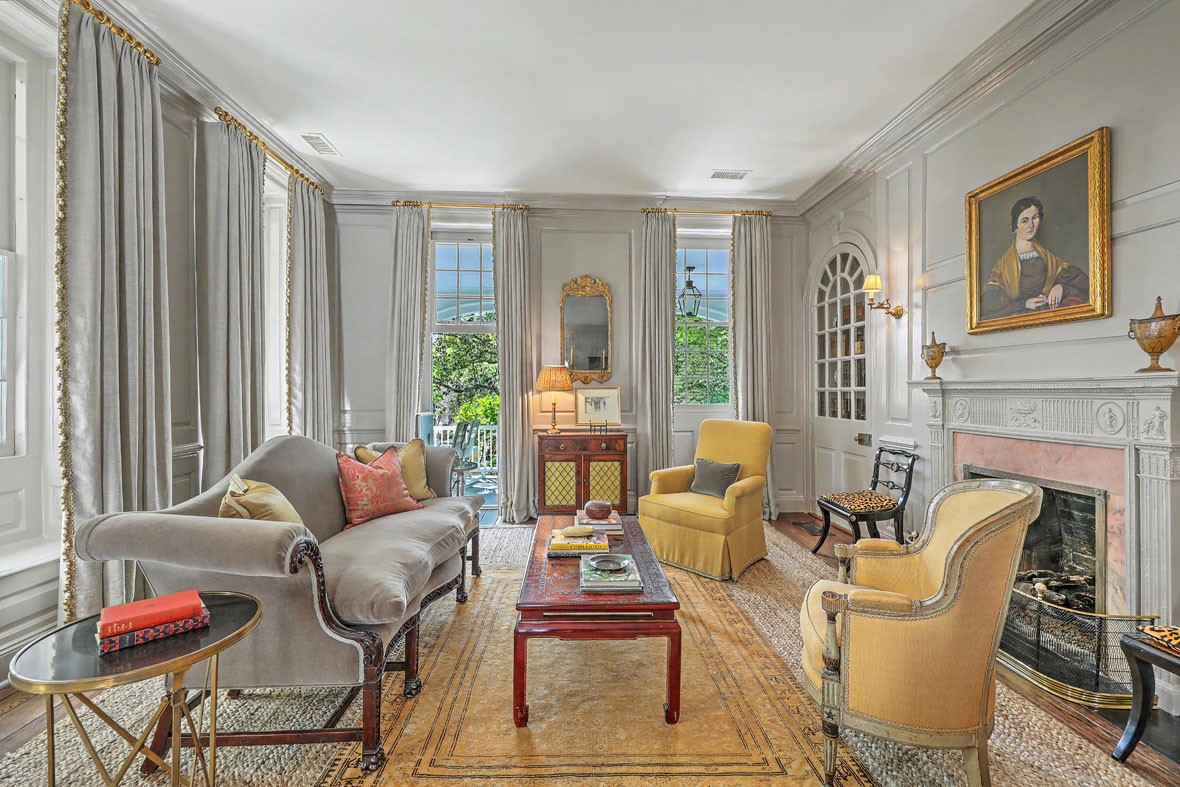
Remarkably, the home retains many of its original eighteenth-century architectural features. Interior spaces showcase floor-to-ceiling cypress paneling, a walnut stair hall, heart pine floors, and finely detailed mantelpieces. The grand reception room and the second-floor drawing room retain paneling that has survived nearly 3 centuries, providing a glimpse into the craftsmanship of Colonial Charleston. Arched doorways, architectural niches, and elegantly proportioned rooms reinforce the house’s refined Georgian character and reflect the lifestyle of a prosperous Colonial merchant household.
Shortly after construction, the house survived the great fire of 1740. Then in 1741, the Roses sold the property to Benjamin Savage. During the decades of his family’s ownership, the home’s history reflected Charleston’s broader story: it has stood through the early town’s fires, the upheaval of the American Revolution and Civil War, and the devastating Great Earthquake of 1886—enduring events that destroyed many surrounding buildings. Over the centuries, it has remained one of the city’s most complete Colonial dwellings.
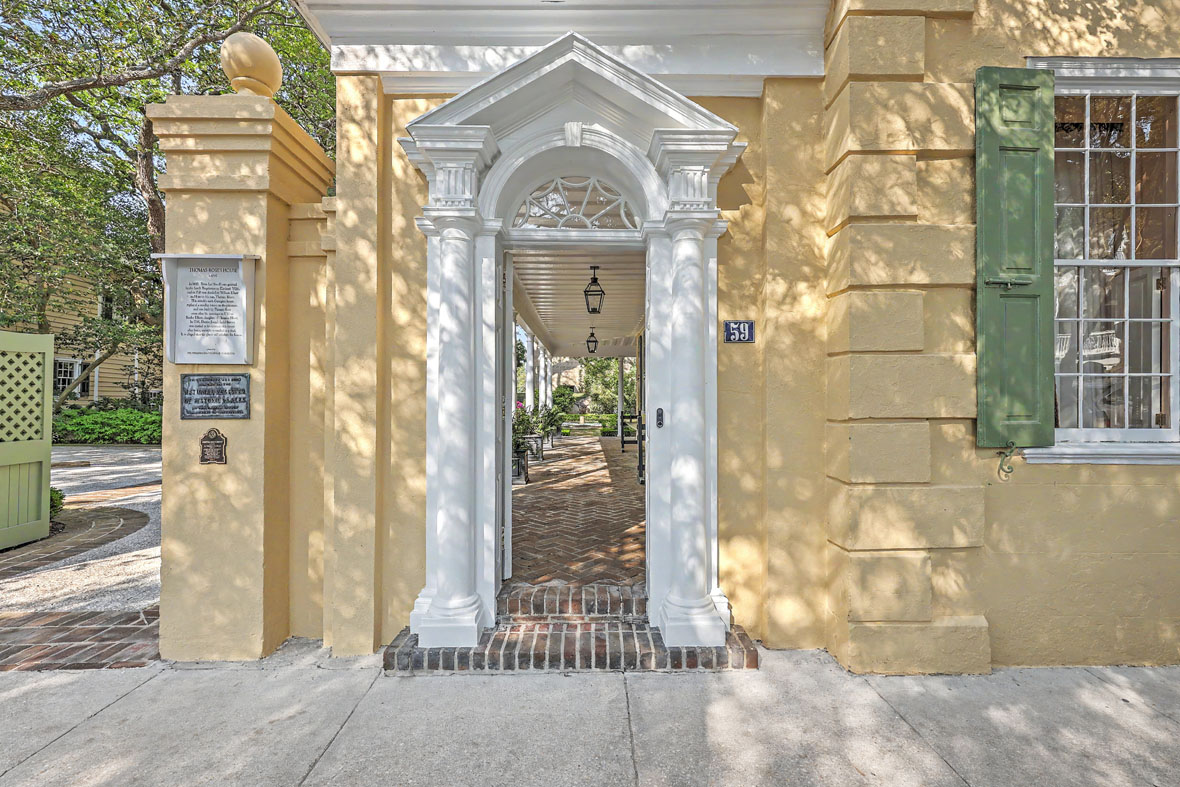
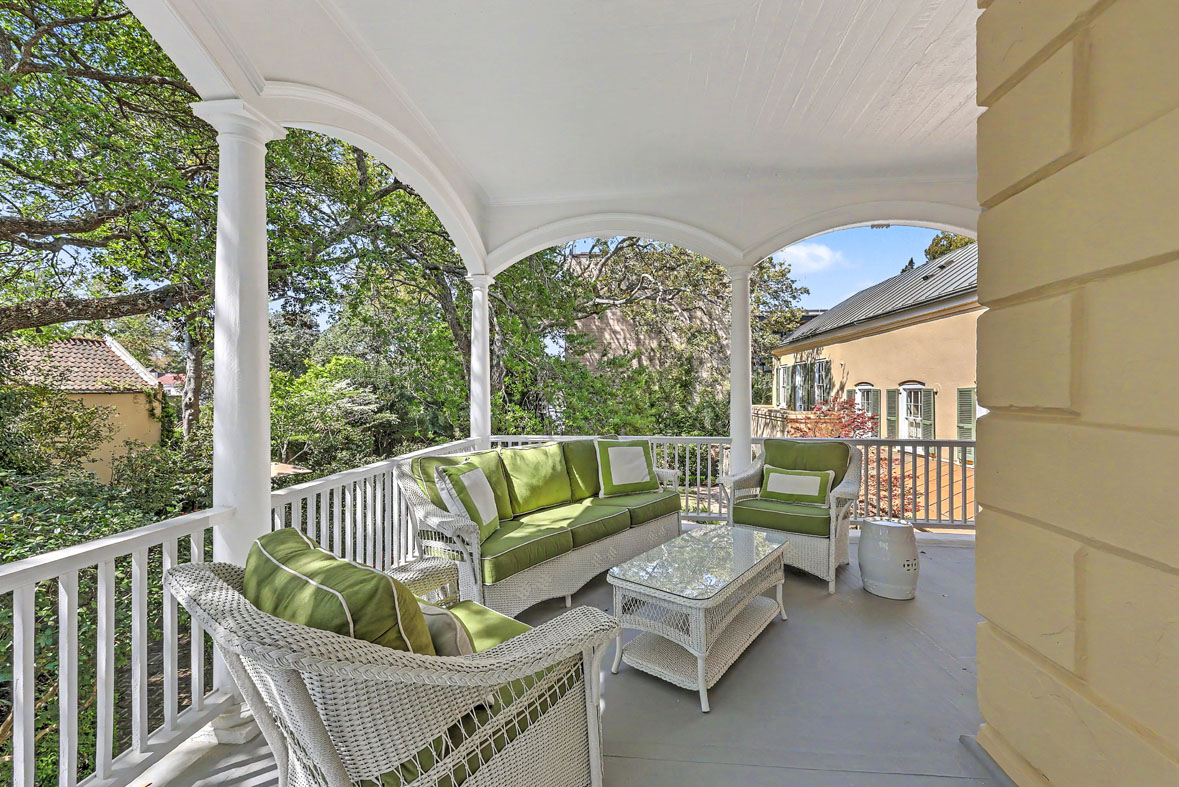
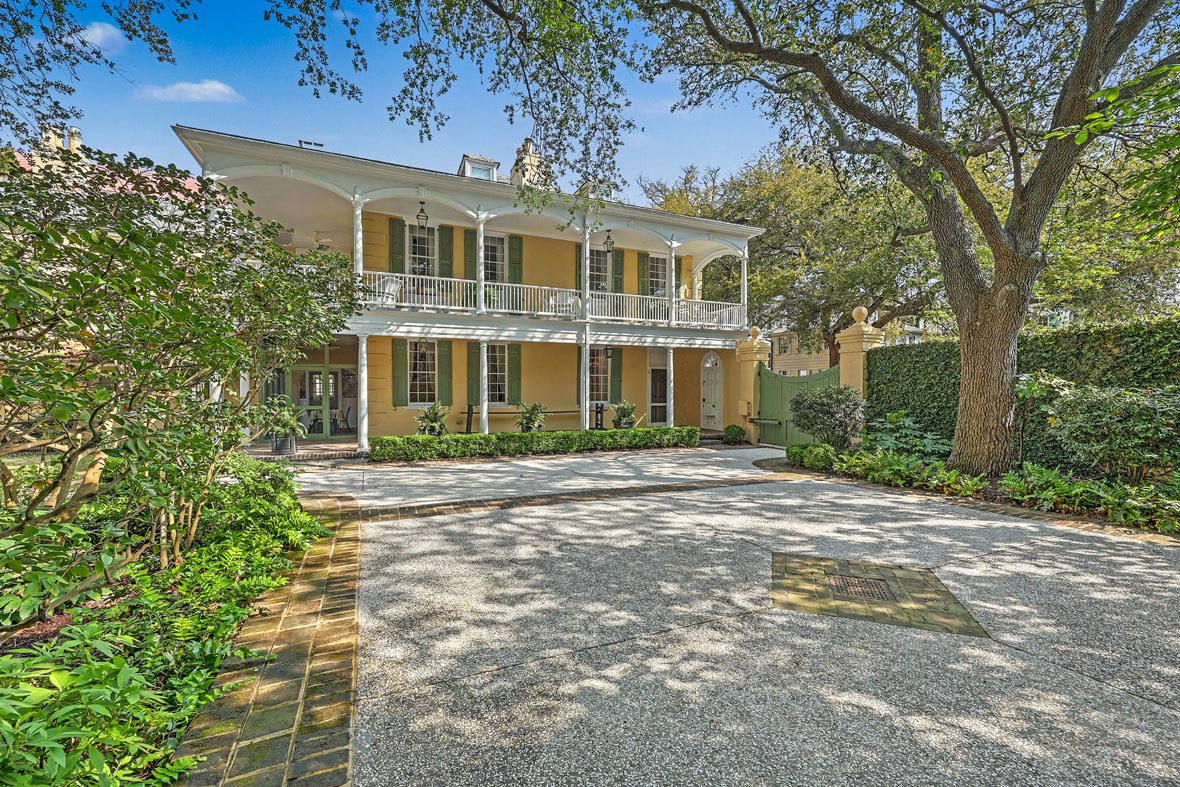
While the interior remains largely intact, the exterior has evolved over time in response to Charleston’s climate and architectural traditions. Around 1830, the Savages added the now-iconic double piazzas and moved the entrance from Church Street to the south façade. The piazza door, with its noteworthy columned surround topped by a fanlight and triangular pediment, provides a transition from exterior and public space, to interior and private space. At the same time, the piazzas introduced shaded outdoor living and allowed the residence to conform more to the Charleston single house style that was then popular. The Savages also updated interior elements, including fireplace mantles.
In 1849 the lot was subdivided into 2 parcels, with the southern section becoming 57 Church Street. A Victorian house was built there and remained until 1954, when it was demolished in a state of disrepair.
The next pivotal chapter in the home’s history came in 1929, when acclaimed Charleston architect Albert Simons (who also restored homes on Rainbow Row as well as the Dock Street Theatre) undertook a careful restoration of the property for the then-owner. He removed Victorian alterations and returned the house to a form more faithful to its Colonial origins, while modernizing it for 20th-century living. Simons would go on to create both Charleston’s Historic District and Board of Architectural Review in 1931, making this residence part of the foundation of America’s earliest preservation movement.
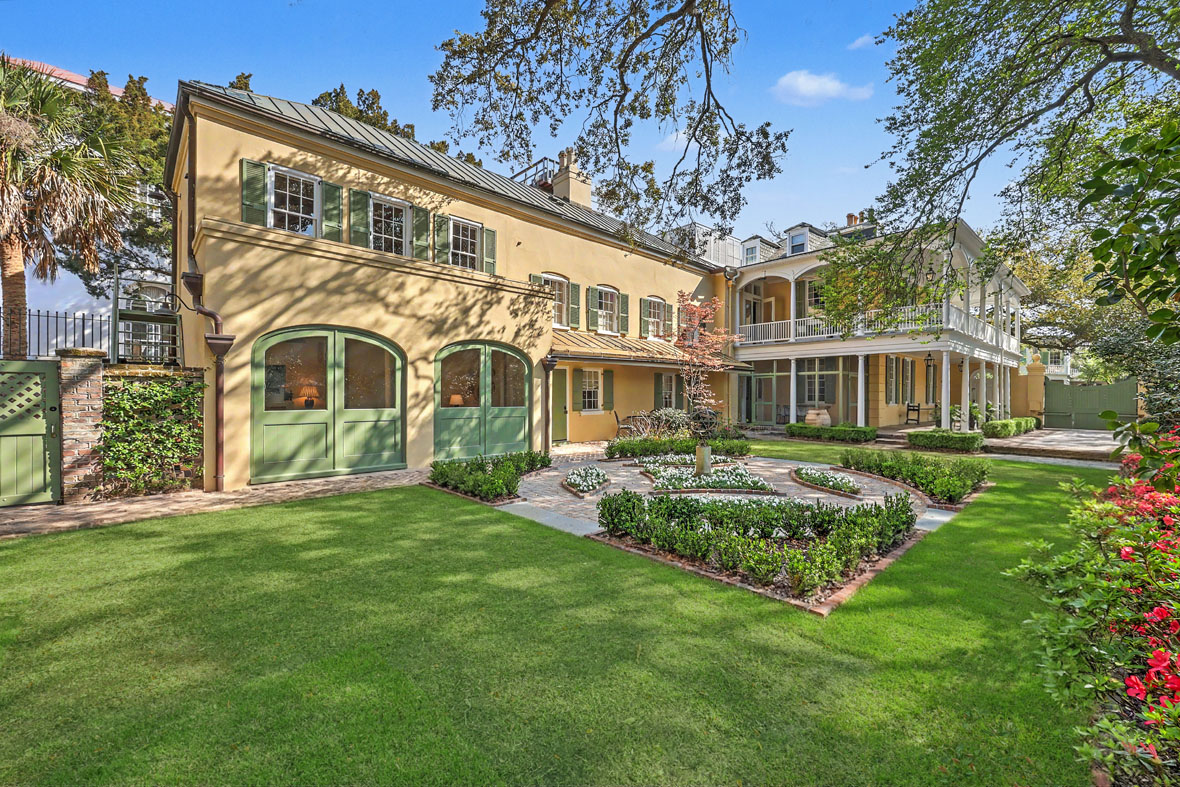
The stewardship of later owners further strengthened the home’s preservation legacy. In 1942, architect Henry P. Staats and his wife Julia acquired the property. They built the hyphen that connects the modern kitchen and primary bath above to the previously detached kitchen and laundry building. The original kitchen hearth with beehive oven for baking bread and herringbone brick floor remain in the current family room, while the original laundry room continues to be used for that purpose. Its fireplace, then used to boil water for washing clothes and linens, is now joined by high-tech machines in a remarkable juxtaposition of technologies.
The Staats were later integral to the origination of Historic Charleston Foundation, cementing 59 Church Street as a cornerstone of the city’s early preservation movement. Today, important parts of the home’s interior and exterior are protected by a Historic Charleston Foundation easement (see documents).
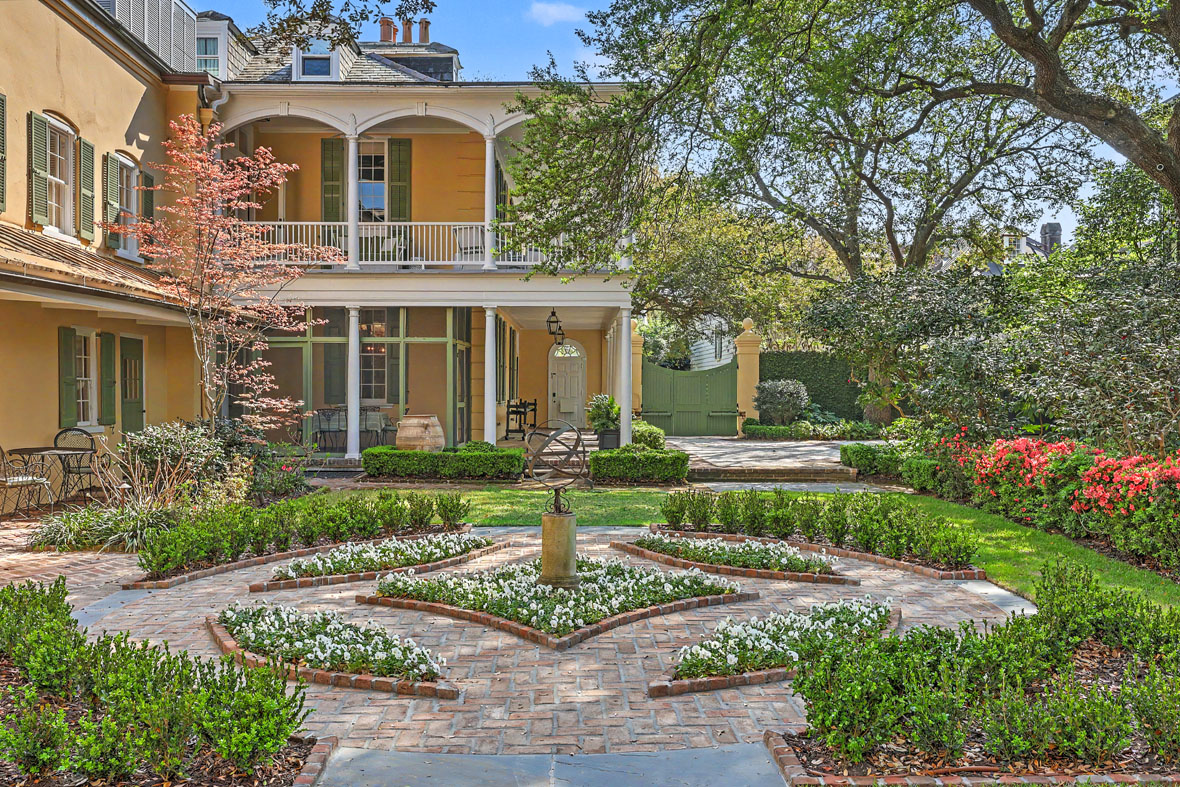
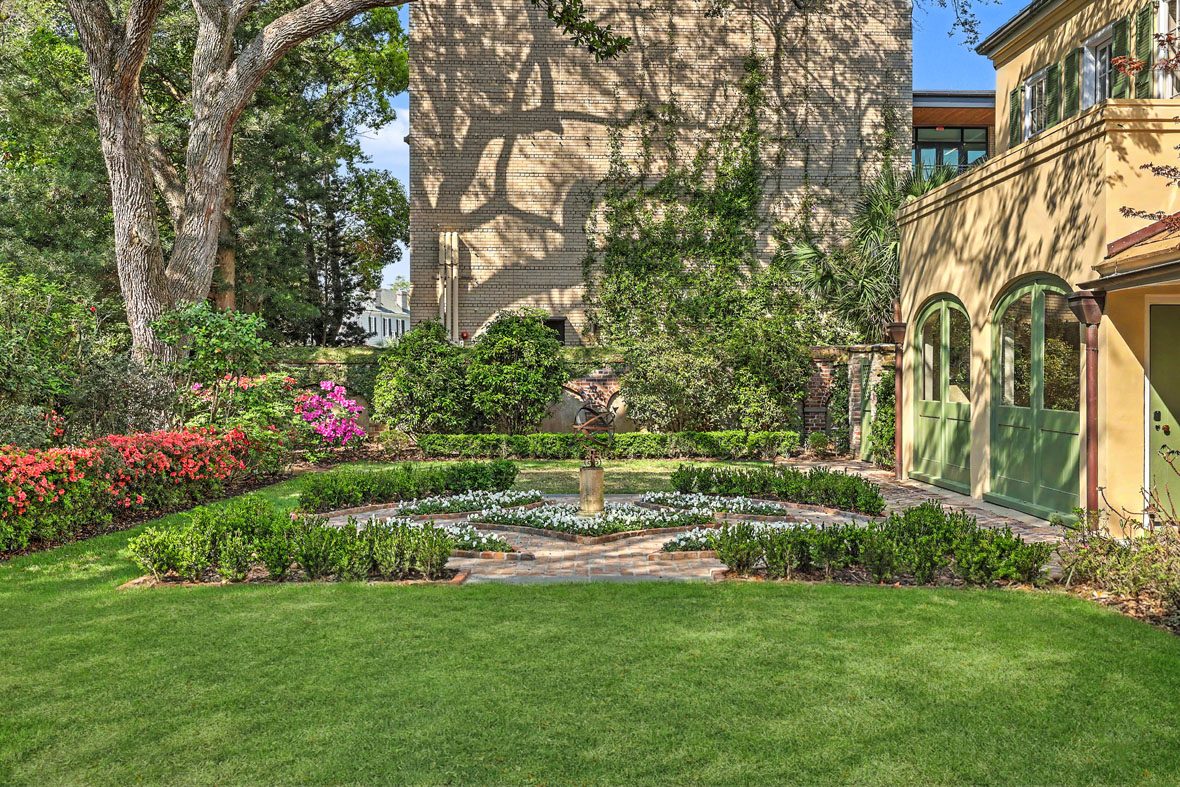
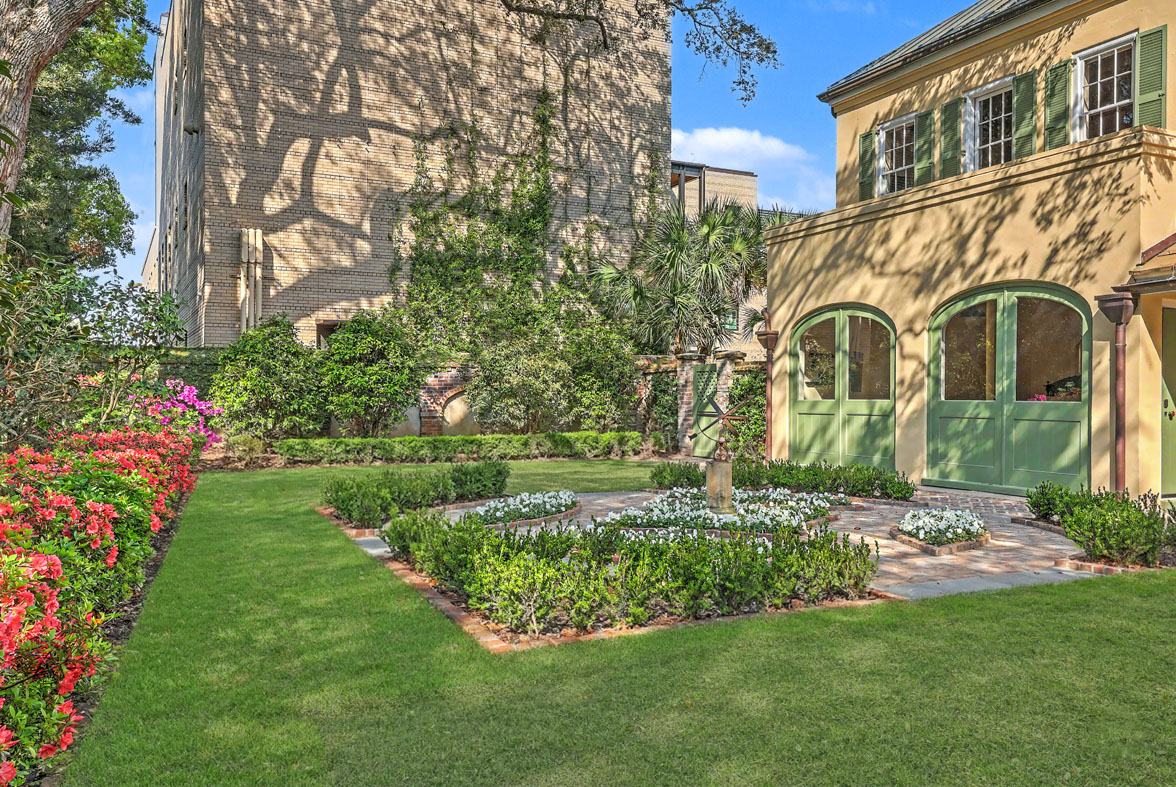
In 1954, the Staats purchased neighboring 57 Church Street, returning the property to its original footprint. They commissioned renowned landscape architect Loutrel Briggs to design and plant the formal gardens in its place. The brick wall encircling the property and the mahogany gate were added at this time, as were the now-grand oak trees that shade the gardens. Briggs’ carefully designed garden rooms offer both beauty and privacy, creating a sense of seclusion in the heart of the historic district.
Through generations of thoughtful stewardship, the house has remained one of the most intact and revered historic residences in Charleston. Through their meticulous attention and work, the home was listed on the National Register of Historic Places in 1970, recognizing its architectural significance.
The lot line between 57 and 59 Church was permanently dissolved as a part of a 2017 sale. This is also when the easements were granted to Historic Charleston Foundation. The estate then underwent a multi-year restoration and modernization, led by Glenn Keyes Architects and skilled craftsmen.
The work preserved the home’s historic fabric while introducing discreet contemporary comforts—an elevator, chef’s kitchen, luxurious primary suite, guest accommodations, and updated mechanical and security systems—allowing the house to function effortlessly as a modern residence.
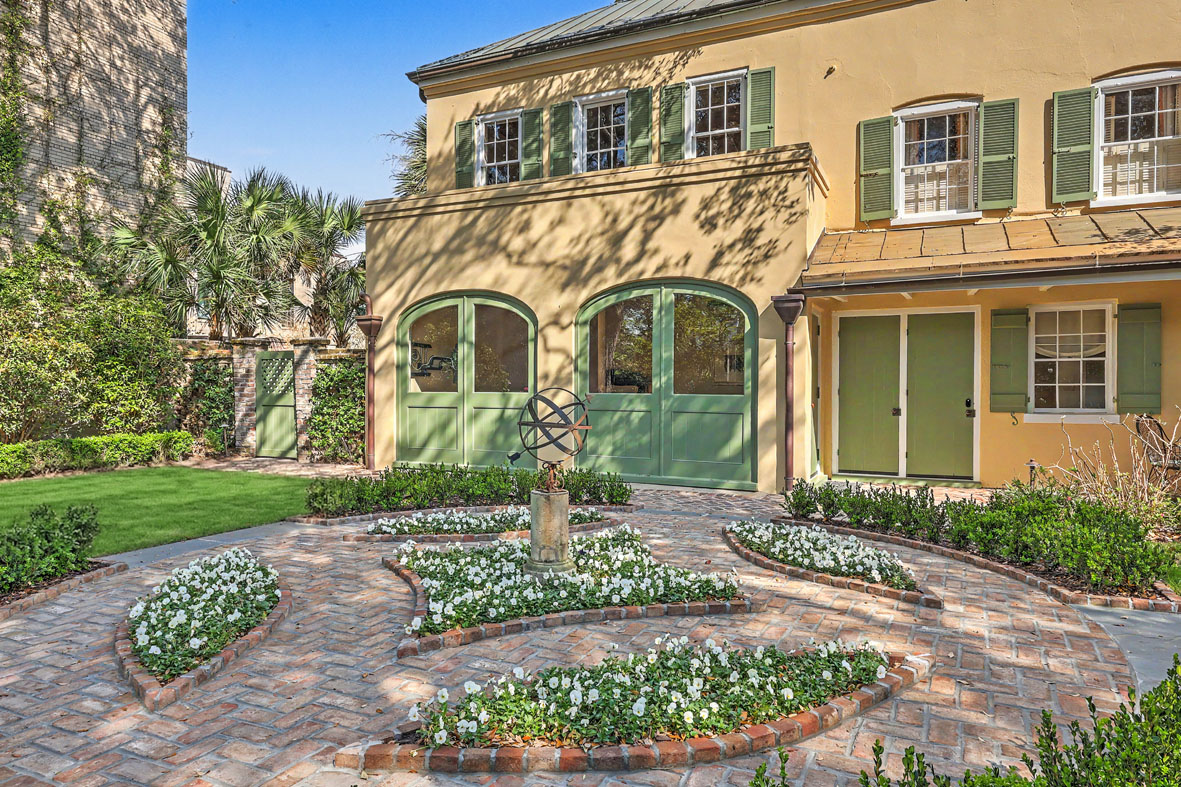
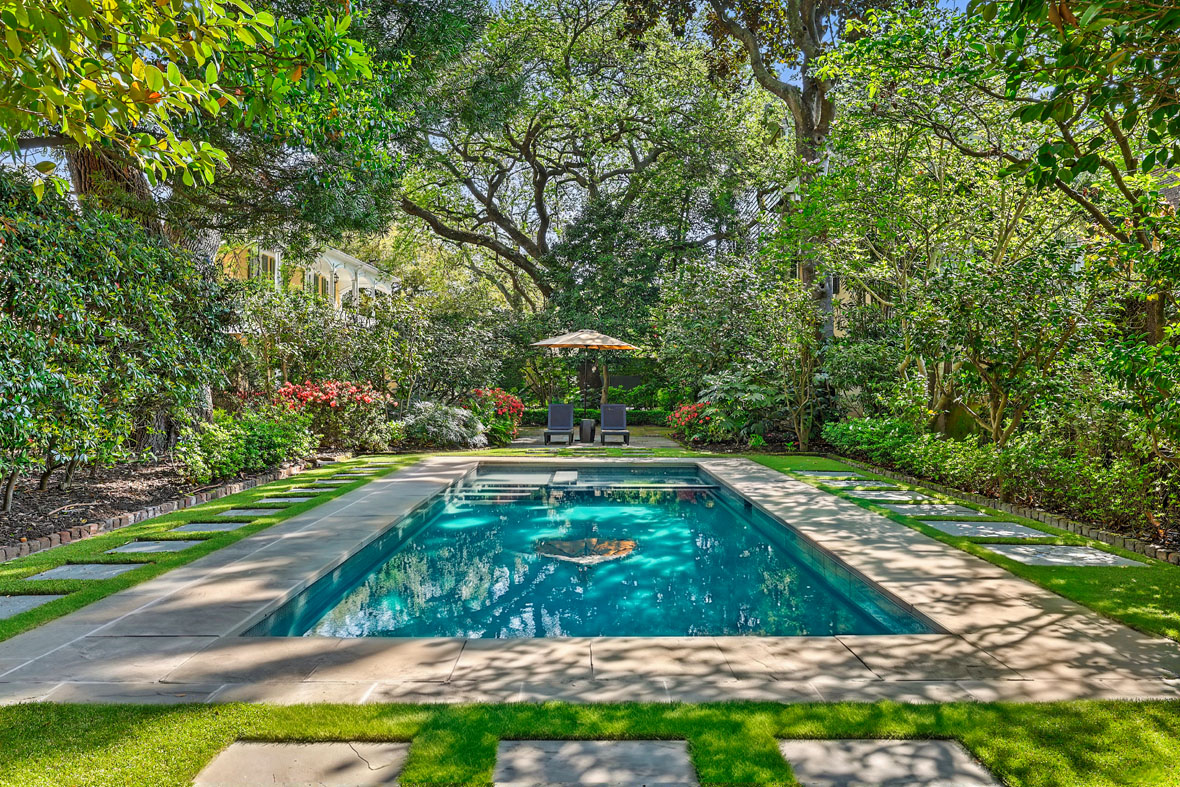
A swimming pool and spa with a heater, chiller, and retractable cover was installed. The hardscape and plantings were updated in 2019-20 by Sheila Wertimer. Most recently, Glen Gardner reestablished the parterre garden surrounding an armillary sphere—a landscape element that predates the Loutrel Briggs layout. Altogether, the gardens of 59 Church Street have been curated by a virtual “Who’s Who” of Charleston landscape design.
The result of hundreds of years of careful stewardship, the house is now a comfortable family residence. Elegant entertaining spaces complement the home’s historic interiors, creating a balance between architectural authenticity and present-day livability, where museum-quality architecture and modern luxury exist in perfect balance.


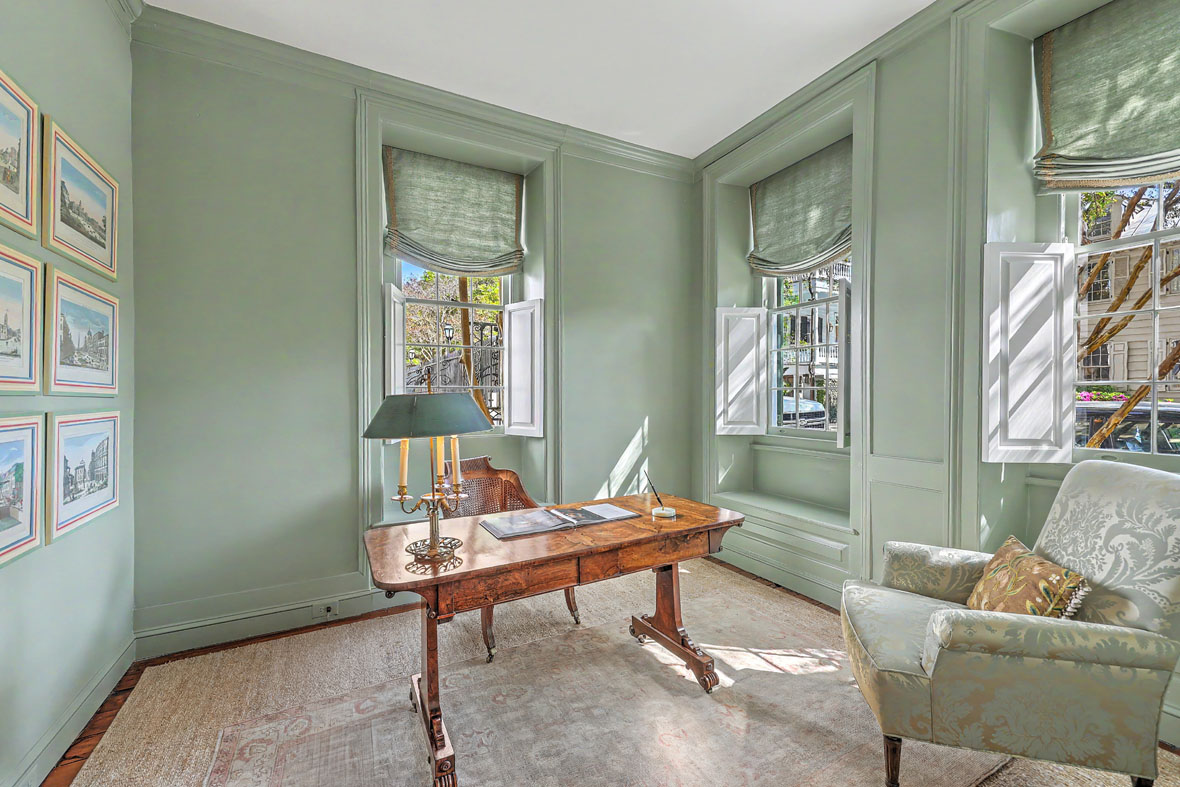
While the Thomas Rose House is celebrated for its architectural pedigree, it is equally known for the way its interiors balance museum-quality preservation with modern livability. Visitors enter through the piazza into a gracious reception room and adjoining office. Traditionally, these were the rooms the public and business associates were welcomed into. Accordingly, they showed off the family’s refined taste and wealth for all to see, even if they were never invited into a party in the more private areas of the home. Cypress paneled walls, fireplace surrounds, heart pine floors, high ceilings, deep shuttered windows, and architectural niches immediately showcase the home’s extraordinary craftsmanship. A series of arched doors and transoms guide the flow of light throughout the house, while carefully chosen period-inspired colors highlight the historic character of the interiors.
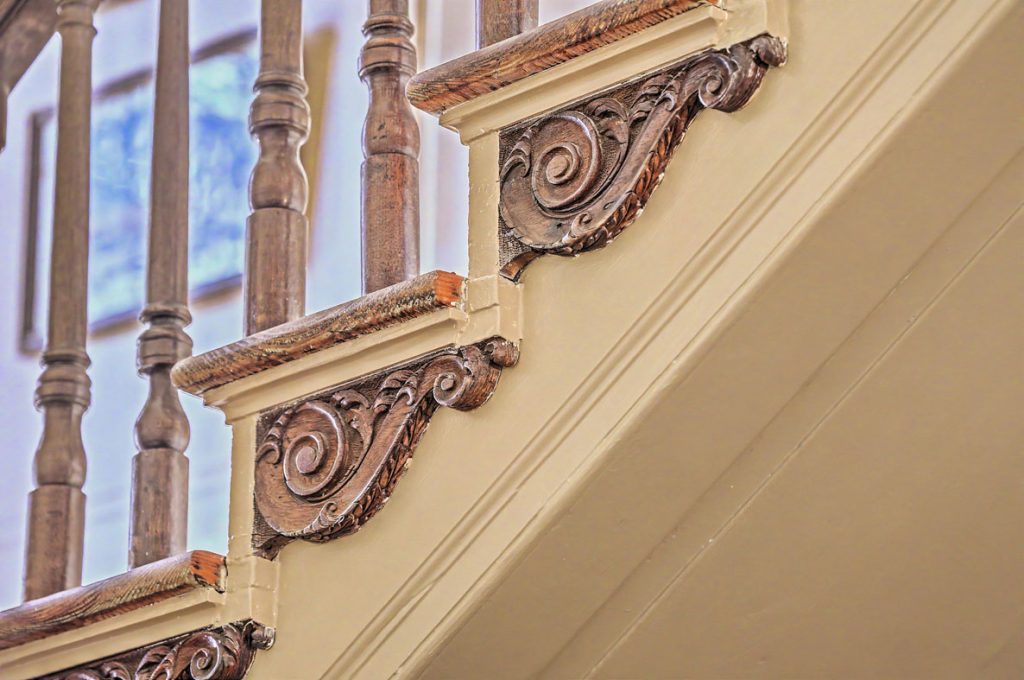
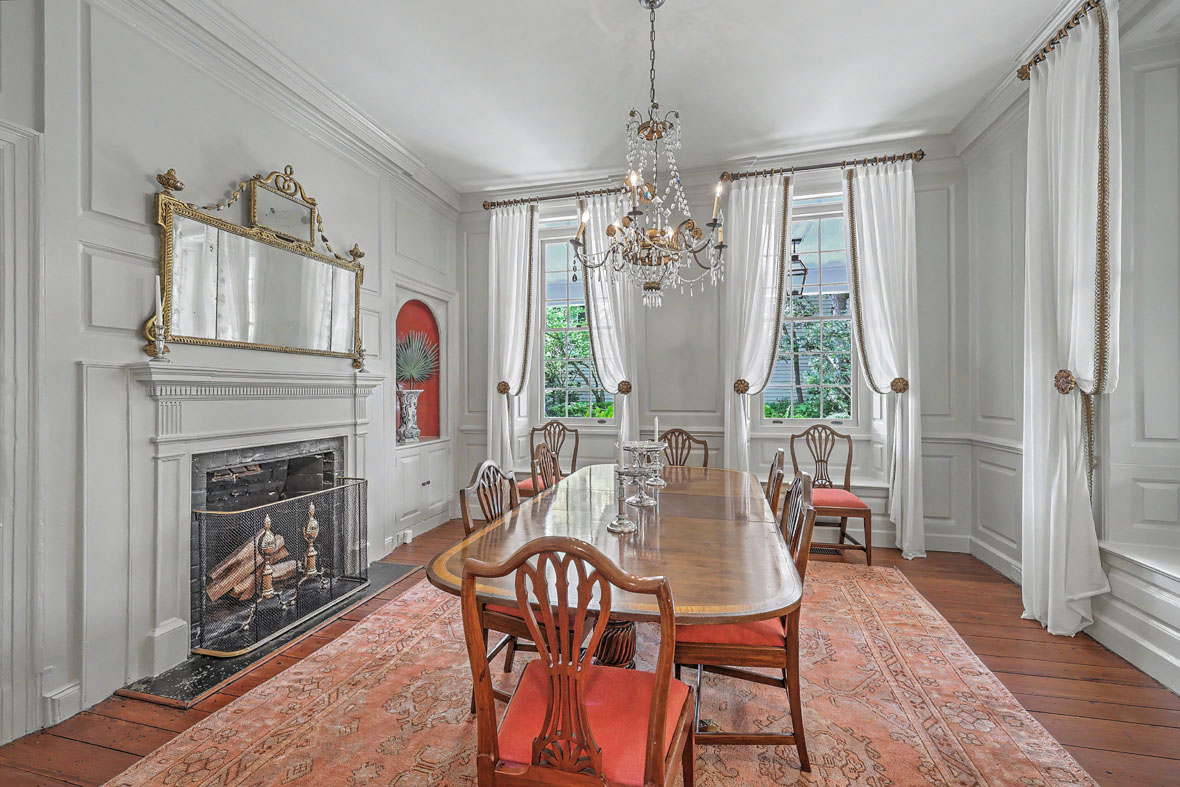
Past the reception room, the dining room exhibits a similar level of formality. The stair hall is paneled in black walnut with a mahogany railing and finely detailed stair brackets that reflect the artistry of 18th-century builders.
Upstairs (away from the detritus of 18th- and 19th-century streets), the drawing room spans the entire width of the house—believed to be the earliest surviving example of this layout in Charleston. It expresses the grand scale typical of Georgian buildings, with tall ceilings, large recessed windows, rich cypress paneling, crown molding, arched doors, and a china cabinet. The delicate Adams-style mantel dates to the early 19th century. (When the fireplace was recently restored, the owners found 6 blue Delft tiles from the earlier surround. These are now incorporated into the backsplash behind the kitchen range.) A jib door beneath the frontmost window allows access to the second-story breezy piazza.
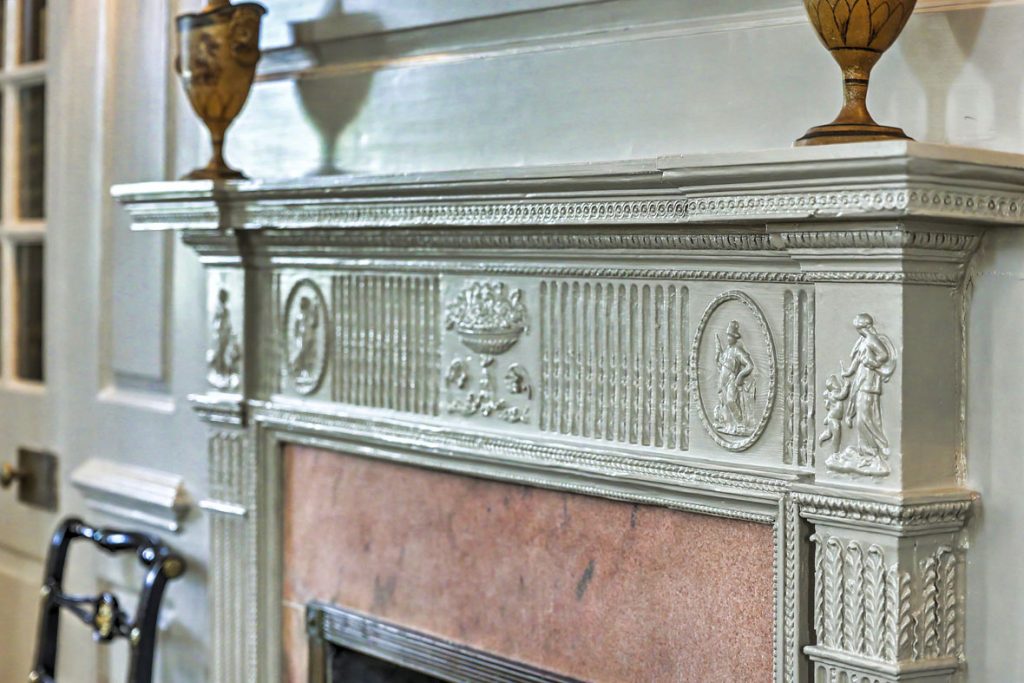
Upstairs (away from the detritus of 18th- and 19th-century streets), the drawing room spans the entire width of the house—believed to be the earliest surviving example of this layout in Charleston. It expresses the grand scale typical of Georgian buildings, with tall ceilings, large recessed windows, rich cypress paneling, crown molding, arched doors, and a china cabinet. The delicate Adams-style mantel dates to the early 19th century. (When the fireplace was recently restored, the owners found 6 blue Delft tiles from the earlier surround. These are now incorporated into the backsplash behind the kitchen range.) A jib door beneath the frontmost window allows access to the second-story breezy piazza.


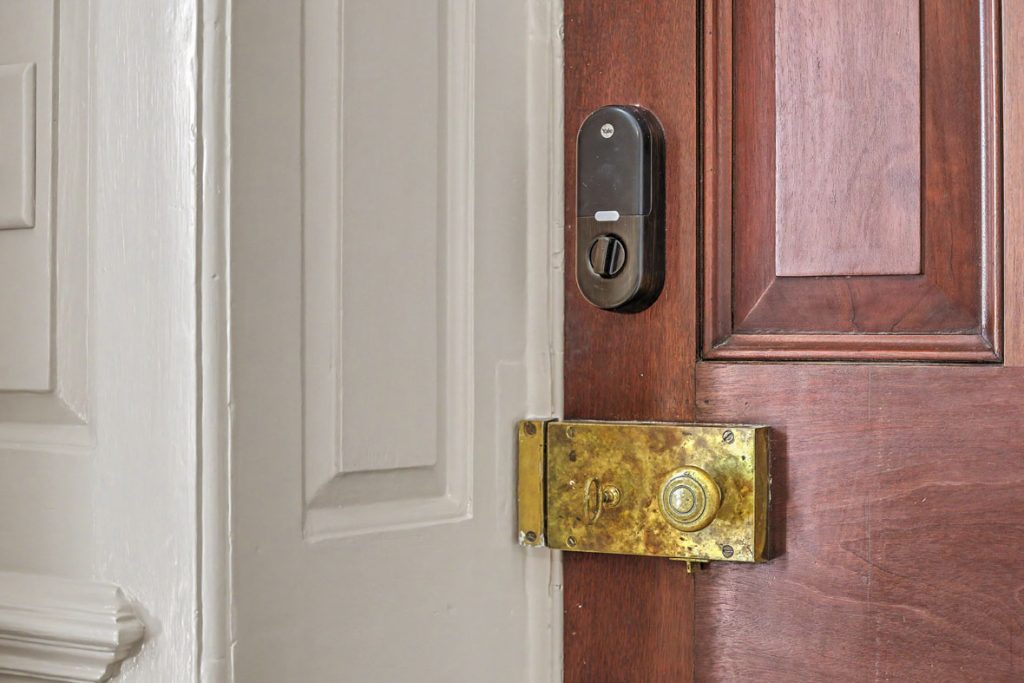
Despite its 1735 origins, the house has been thoughtfully adapted for modern living. Discreet updates include an elevator, modern alarm system, and keyless entry integrated along antique brass hardware, ensuring comfort and security while maintaining historic integrity. A powder room off the stair hall and other carefully placed conveniences support everyday living without compromising the home’s architectural authenticity.
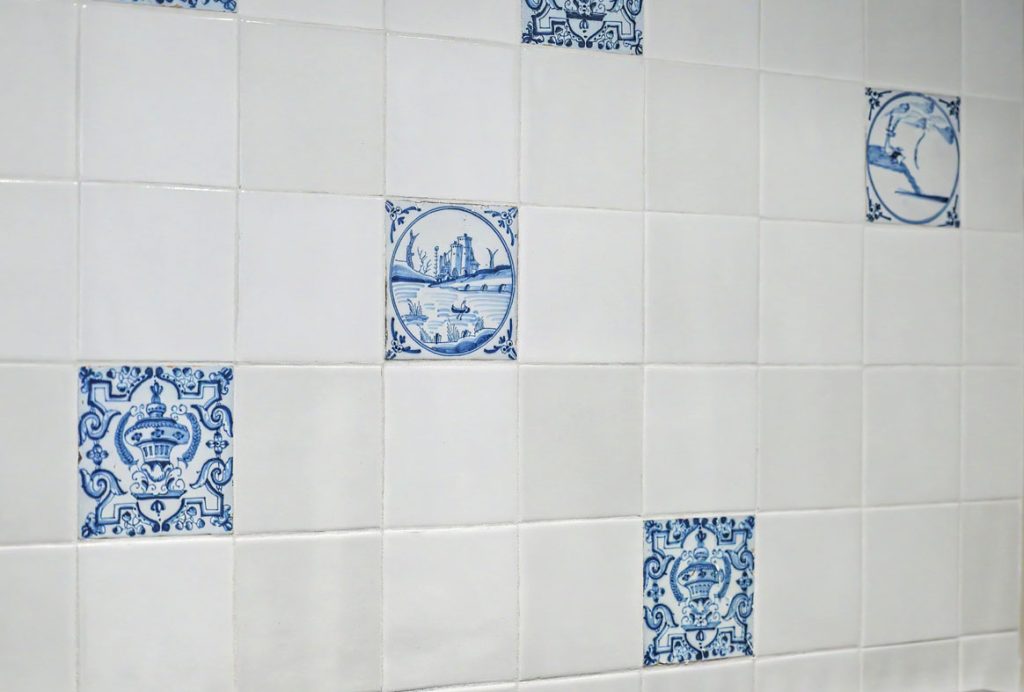
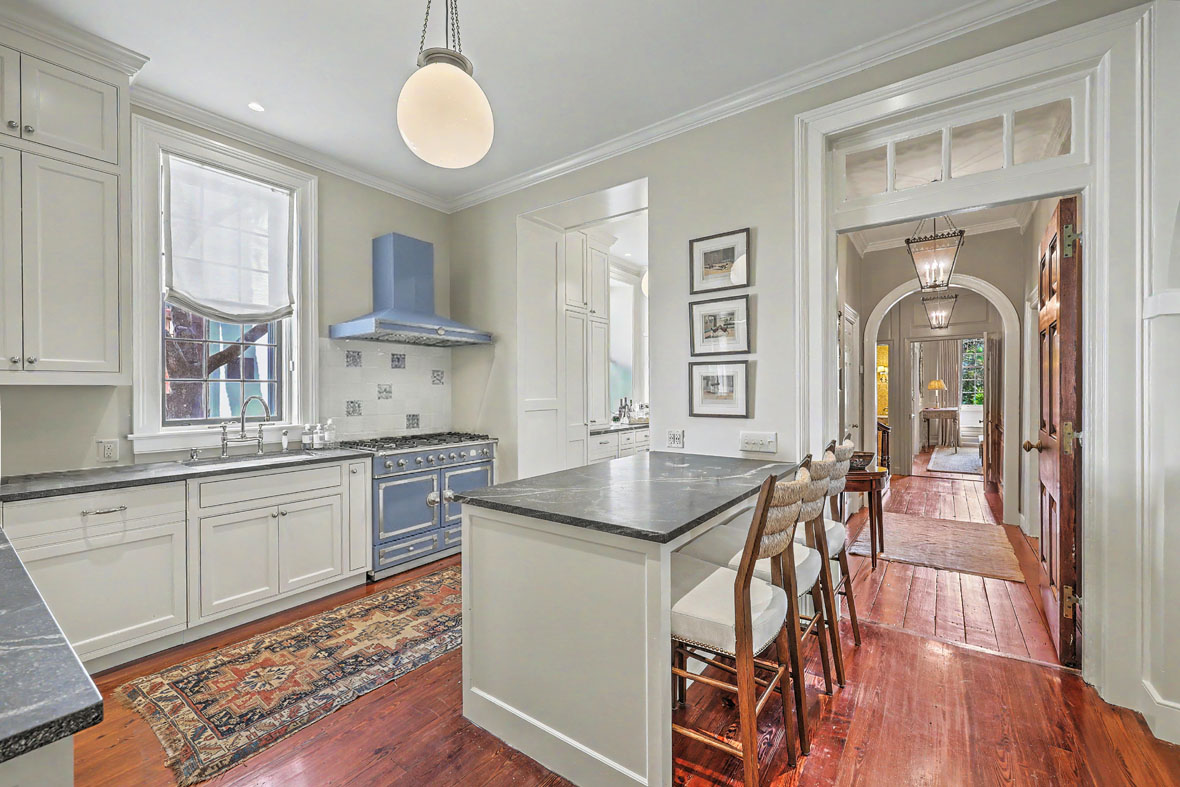
Located within the hyphen linking the main house to the service wing, the chef’s kitchen features custom cabinetry, a La Cornue gas range (with Delft tiles from the drawing room fireplace restoration in the backsplash above), and integrated Sub-Zero refrigerator and freezer. A butler’s pantry with bar, wine cooler, and Bosch integrated dishwasher supports effortless entertaining. Just beyond, a screened outdoor dining room allows meals to be enjoyed year-round in Charleston’s temperate climate.
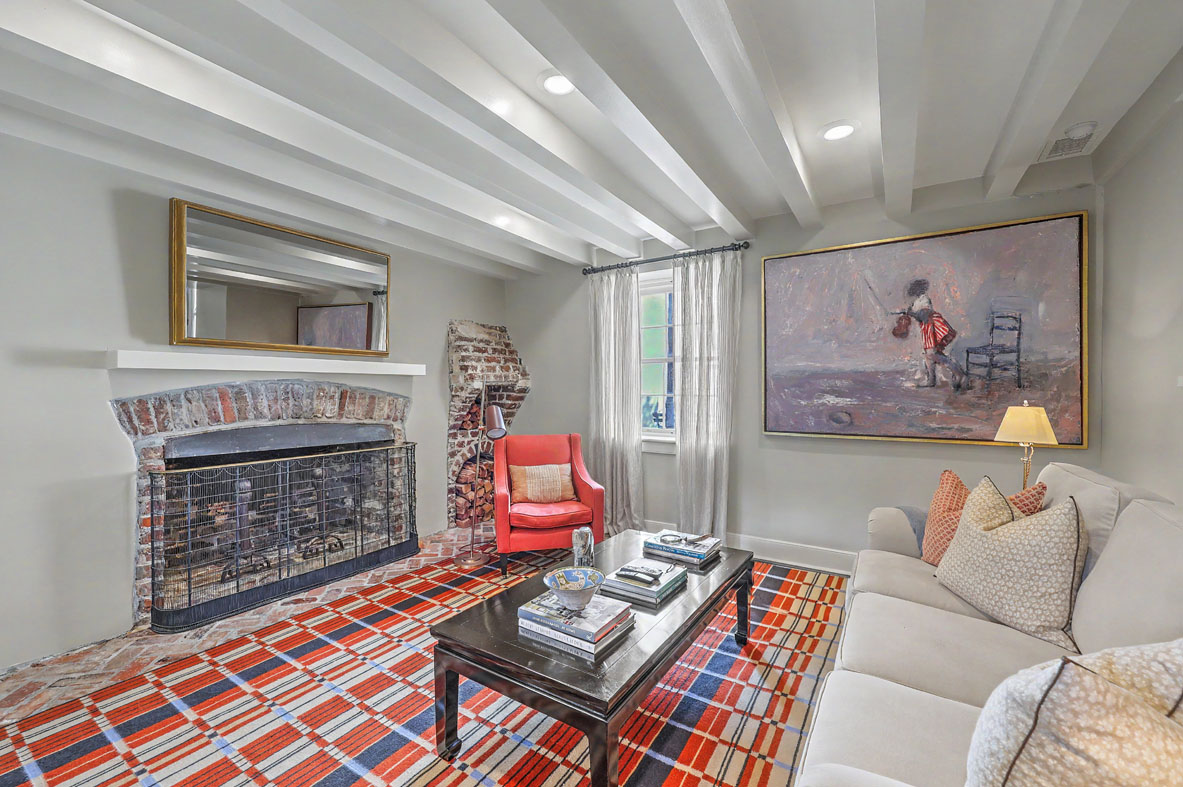
Adjacent to the kitchen, the original working kitchen has been transformed into a comfortable family room. The large brick hearth with beehive ovens now serves as a dramatic focal point. Herringbone brick floors, exposed beams, and a two-sided fireplace shared with the laundry room create a warm and inviting gathering space that celebrates the house’s working history while functioning beautifully for modern family life. The mirror above the hearth cleverly conceals a television, blending the latest in modern tech seamlessly into its historic surroundings.
The original laundry room continues to be used for that purpose. Its fireplace, then used to boil water for washing clothes and linens, is now joined by high-tech machine machines in another fascinating juxtaposition of technologies. It’s accessible from both the main house and the garden, allowing for use by the carriage house guest suite as well. Its half bath serves those perusing the gardens without having to enter the main house.


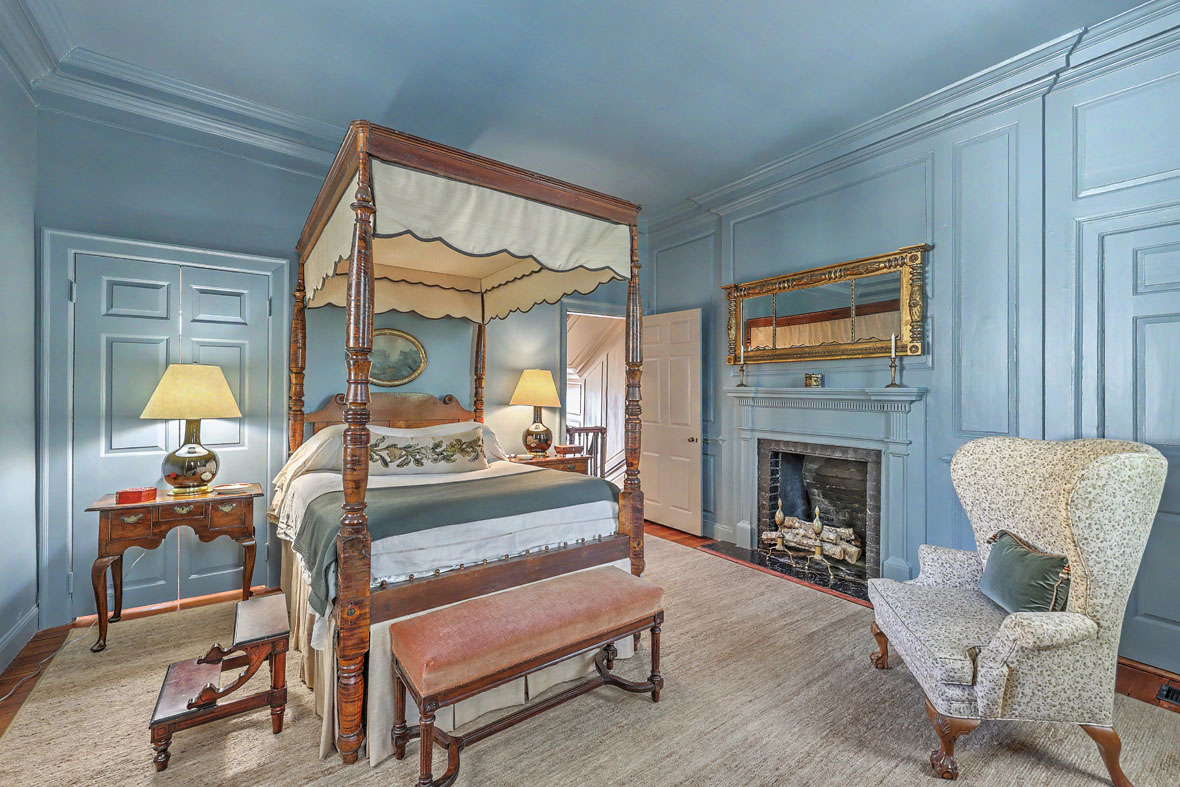
The remainder of the second floor comprises the luxurious primary suite, which can be separated from the more public areas of the home for privacy. The bedroom opens to the sweeping piazza through a jib door hidden in a window, offering views of the formal parterre garden framed by an arcade of arches. The primary bath includes dual sinks, a freestanding soaking tub, a separate water closet with sink, and a massive marble shower room with multiple shower heads for a spa-like experience.
The dressing room adds a built-in marble vanity, window seat, generous storage, and even a small refrigerator—creating a personal space that feels more like a private boutique than a traditional closet. Down the hall, a flexible room-sized closet could easily serve as a sitting room, nursery, dressing room, or private home office. (A virtually staged version of this space as a nursery is included to help you visualize the convenience of its size and location.)
Third floor adds 3 dormer bedrooms and a full bath. The bedrooms each have built-in closets and drawers. Two also feature built-in desks, ideal for school-aged children. (Each of these spaces has been virtually staged as a child's room as well.)


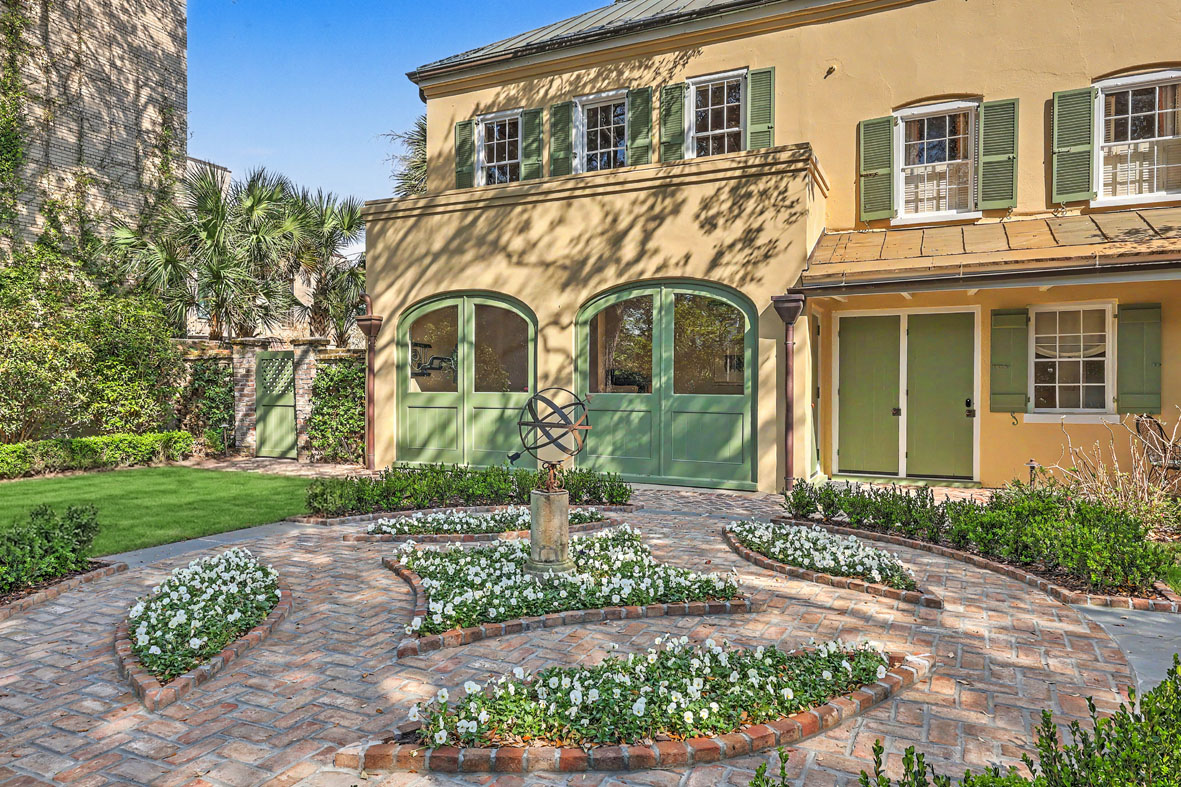


Guest accommodations are thoughtfully arranged to provide both comfort and privacy. The original carriage house has been transformed into a guest suite with sitting, dining, and sleeping areas, along with a breakfast bar and a full bath. The original carriage doors are preserved as large windows that flood the interior with light and frame views of blooming azaleas in the garden beyond. Automatic shades ensure restful nights for visiting family and friends.
Above is a studio apartment with its own exterior entrance and private walled courtyard. This residence includes a full kitchenette and stacked laundry, along with a bedroom and full bath. A balcony overlooking the gardens provides the perfect place for a bistro set and al fresco dining.
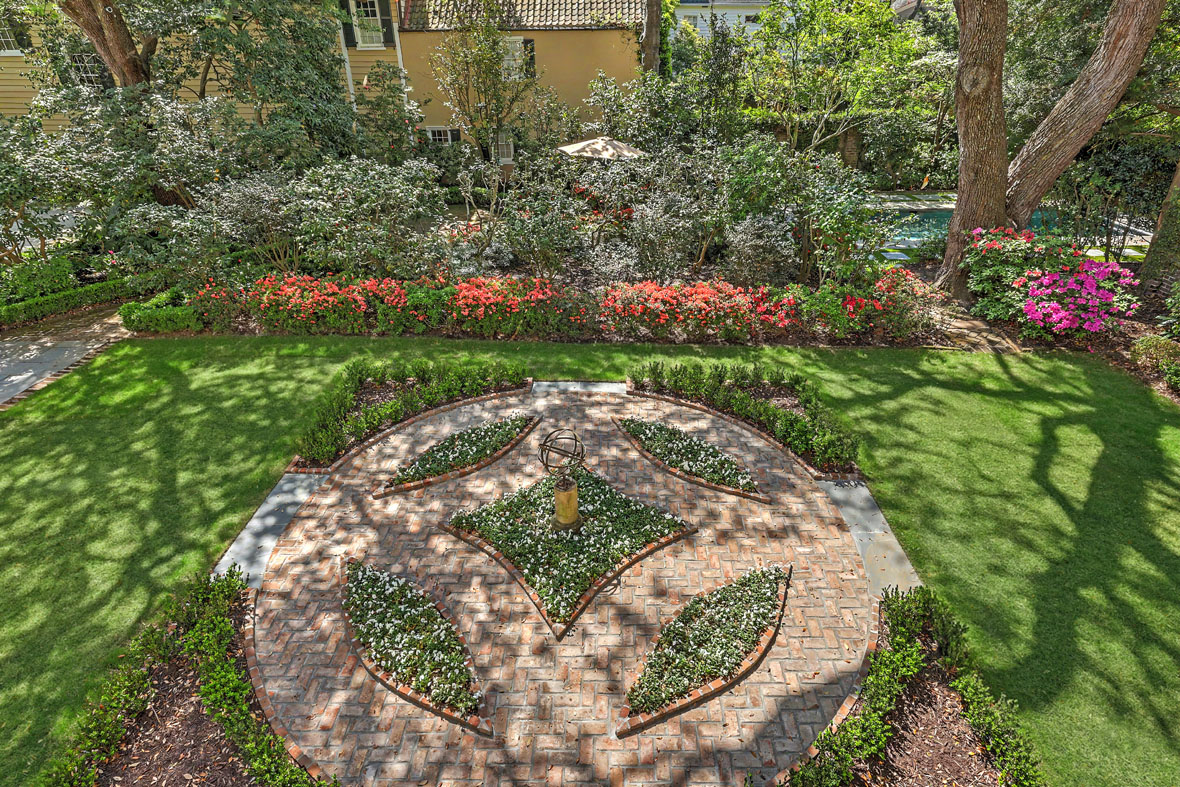
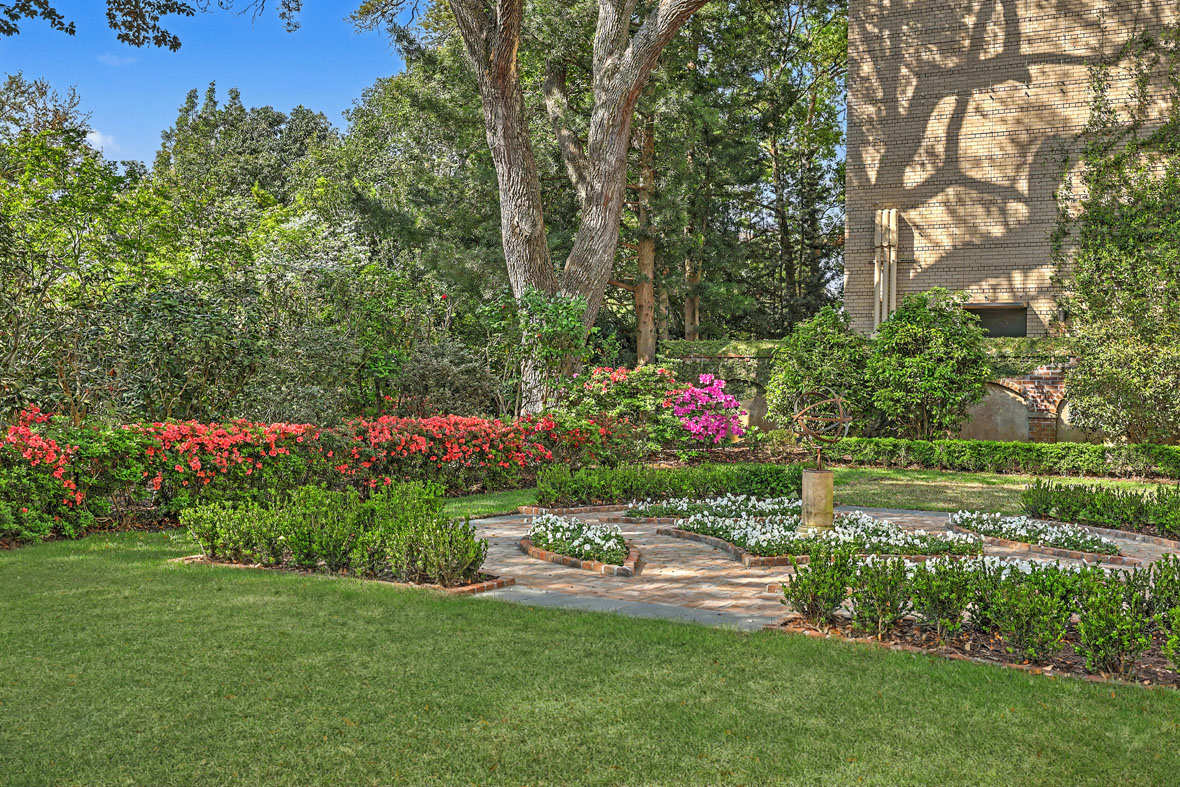
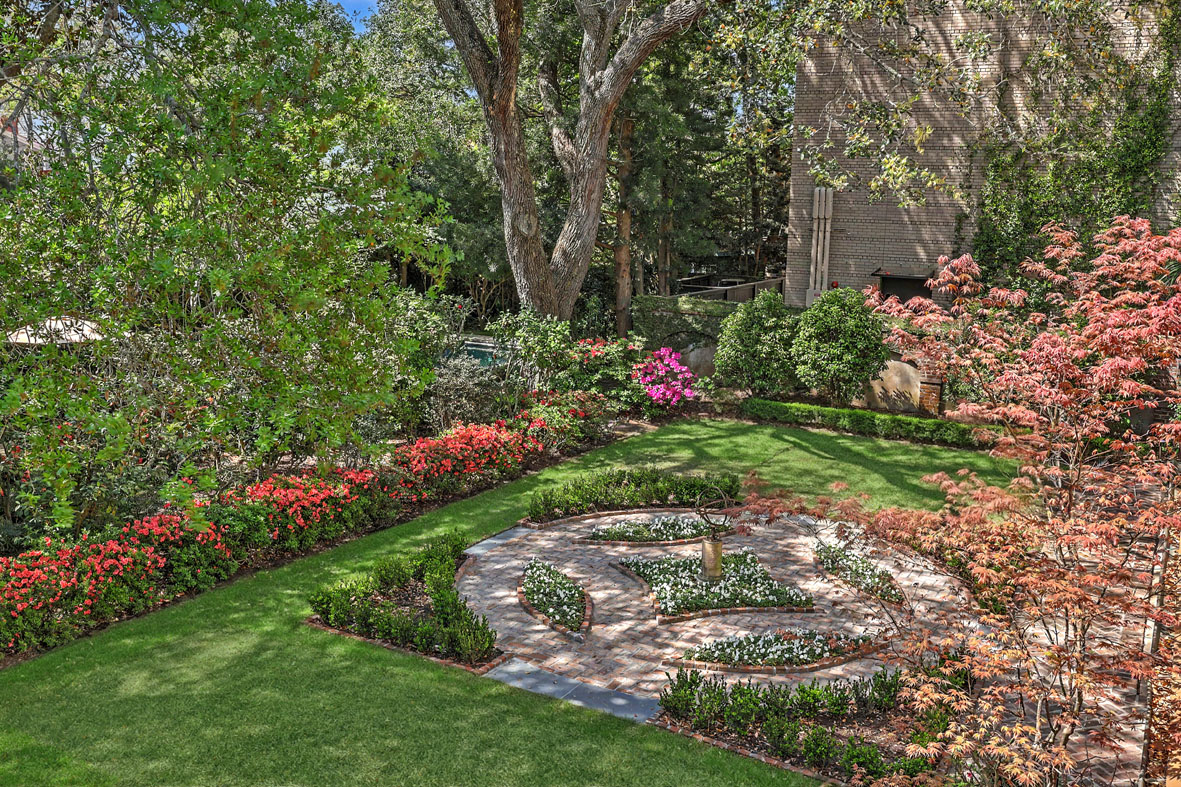
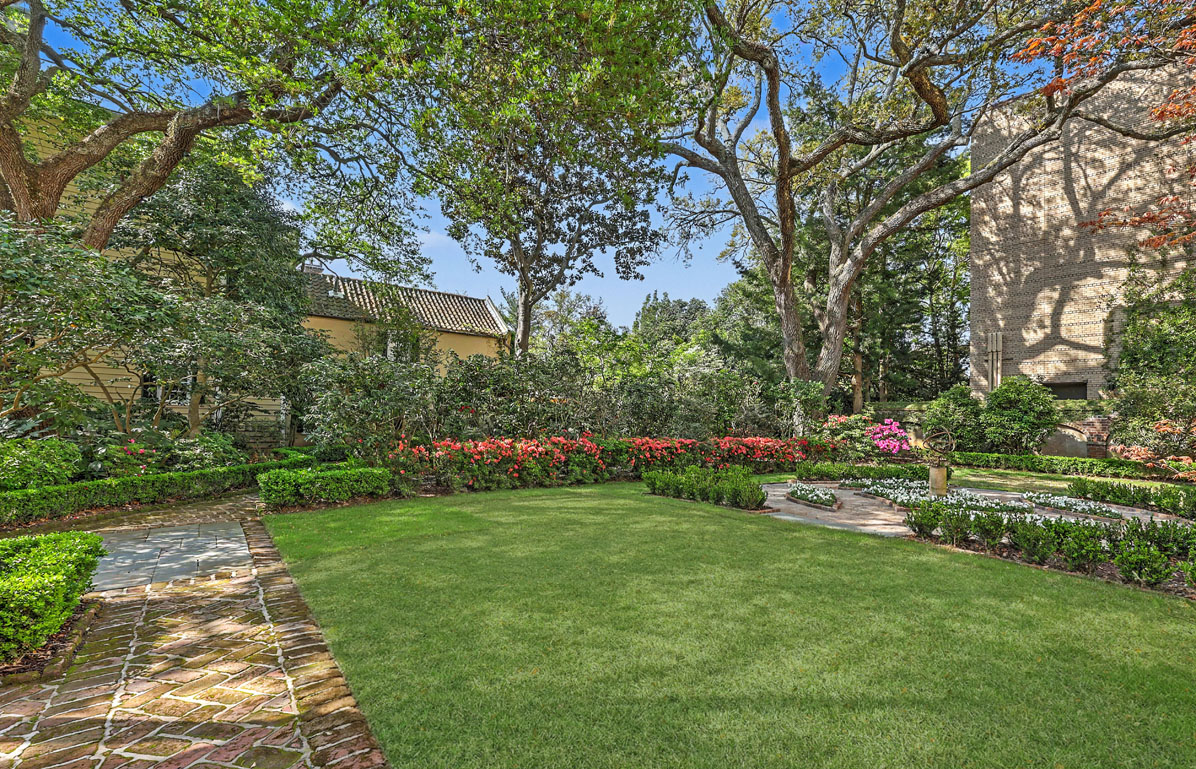
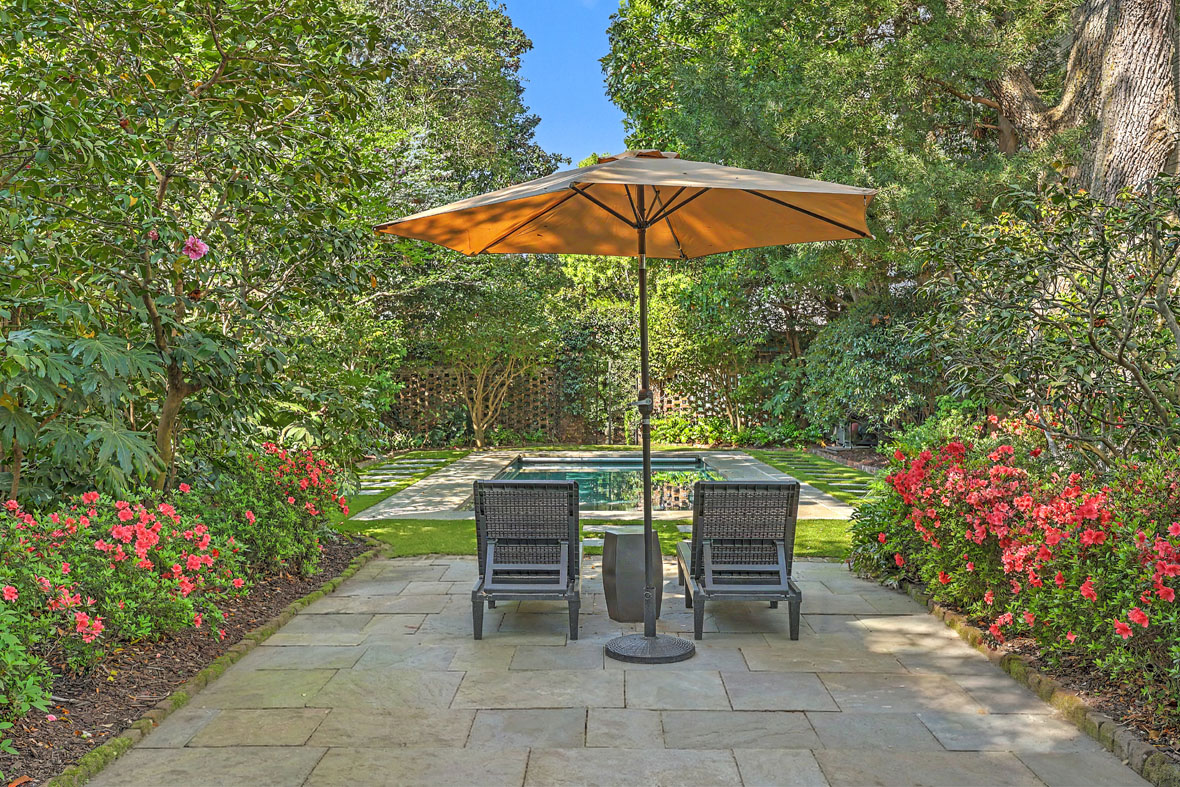
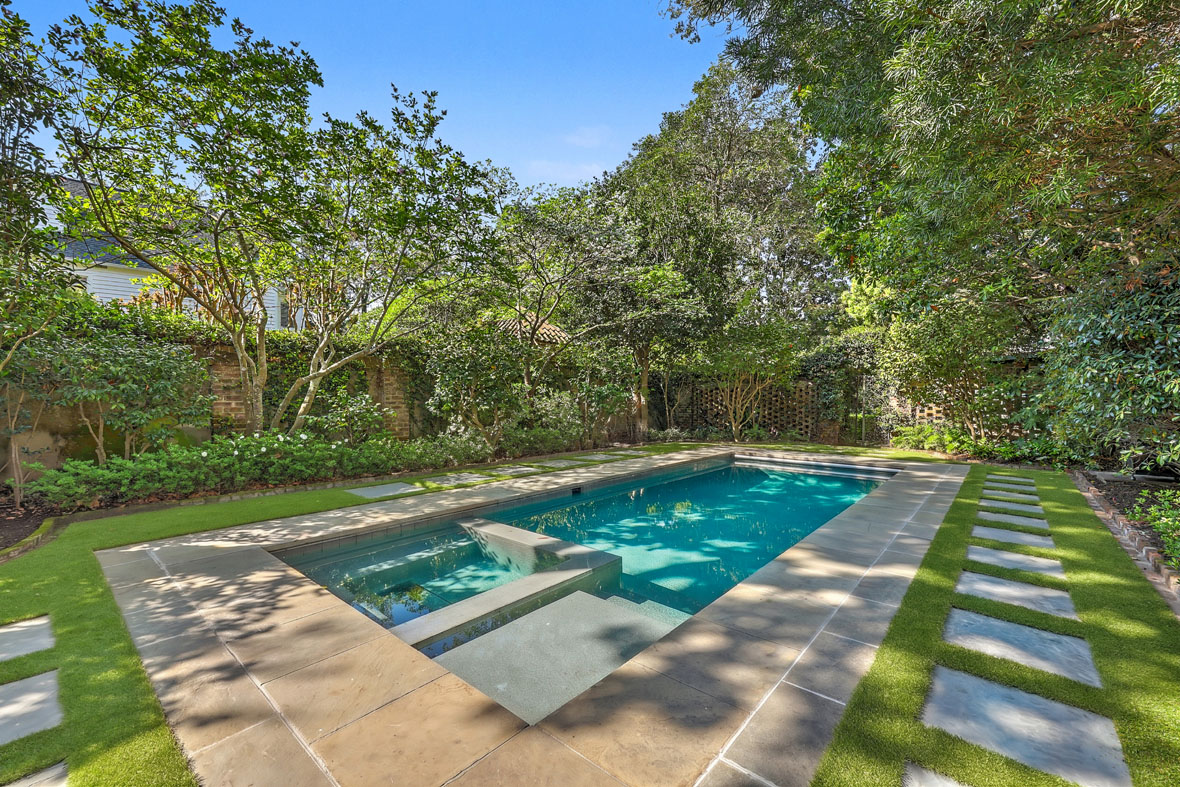
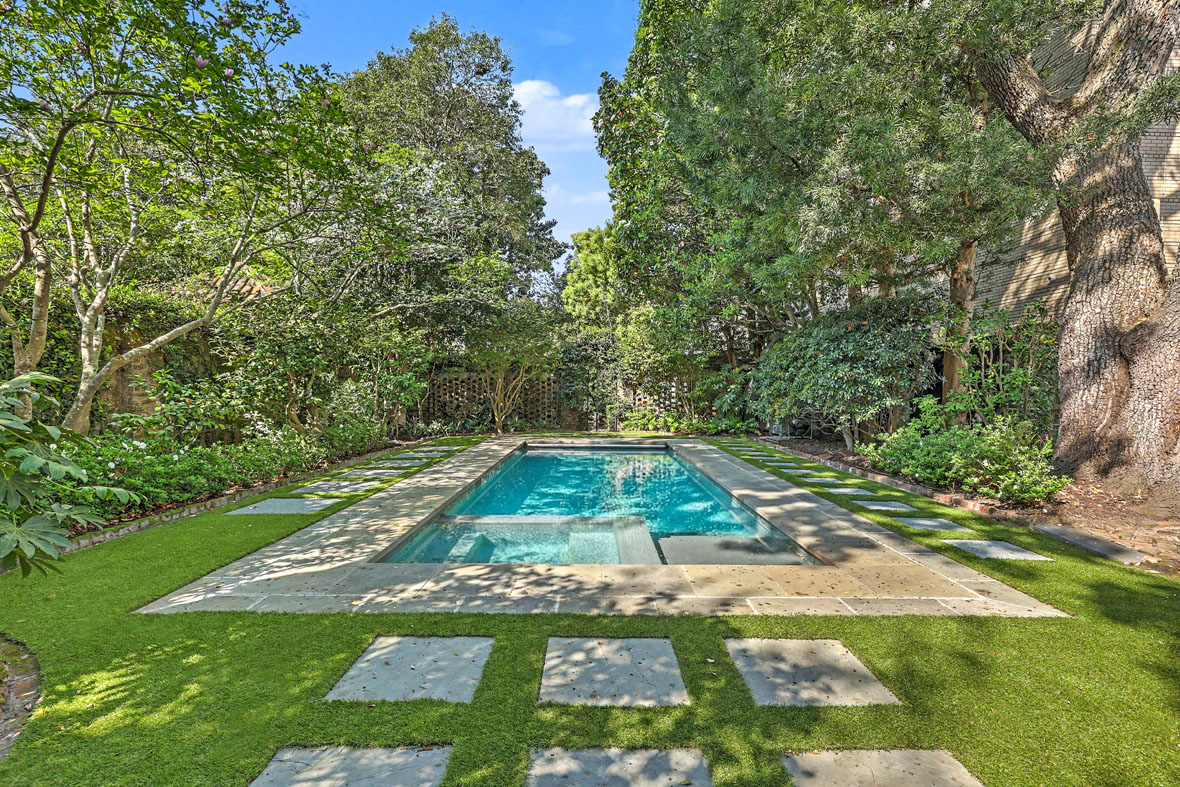
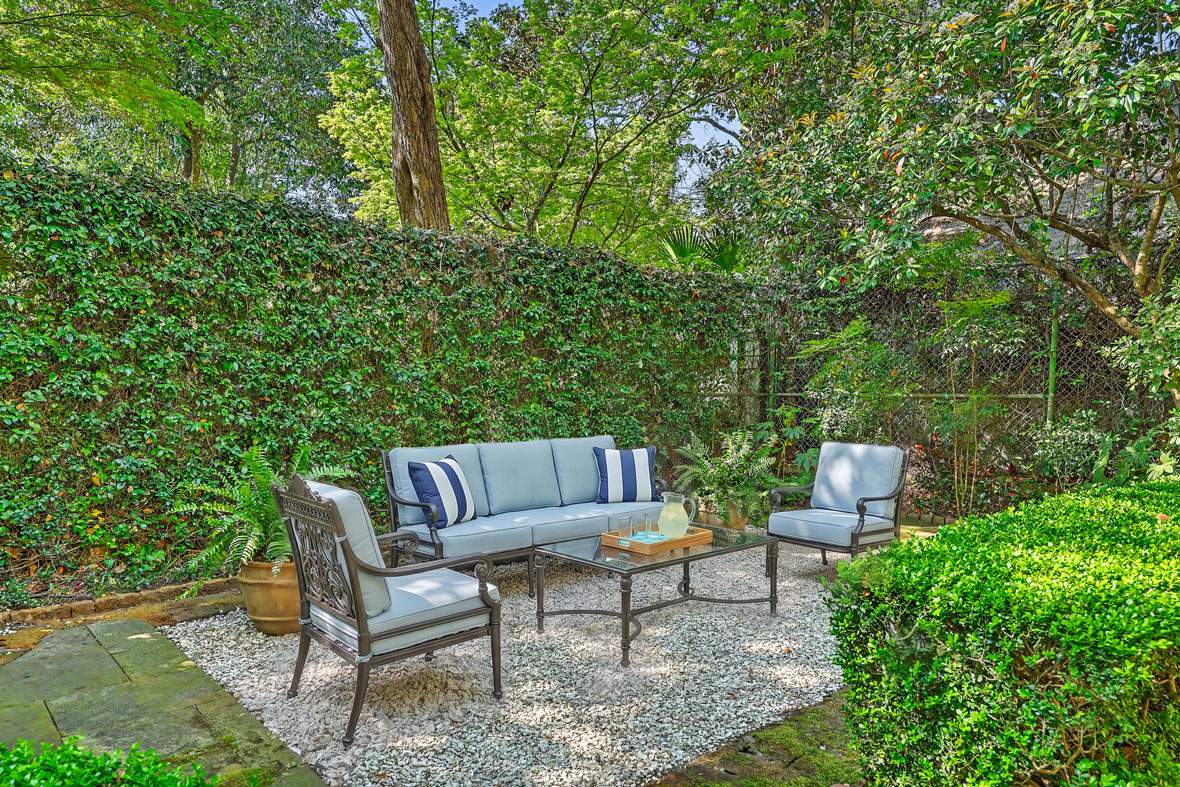
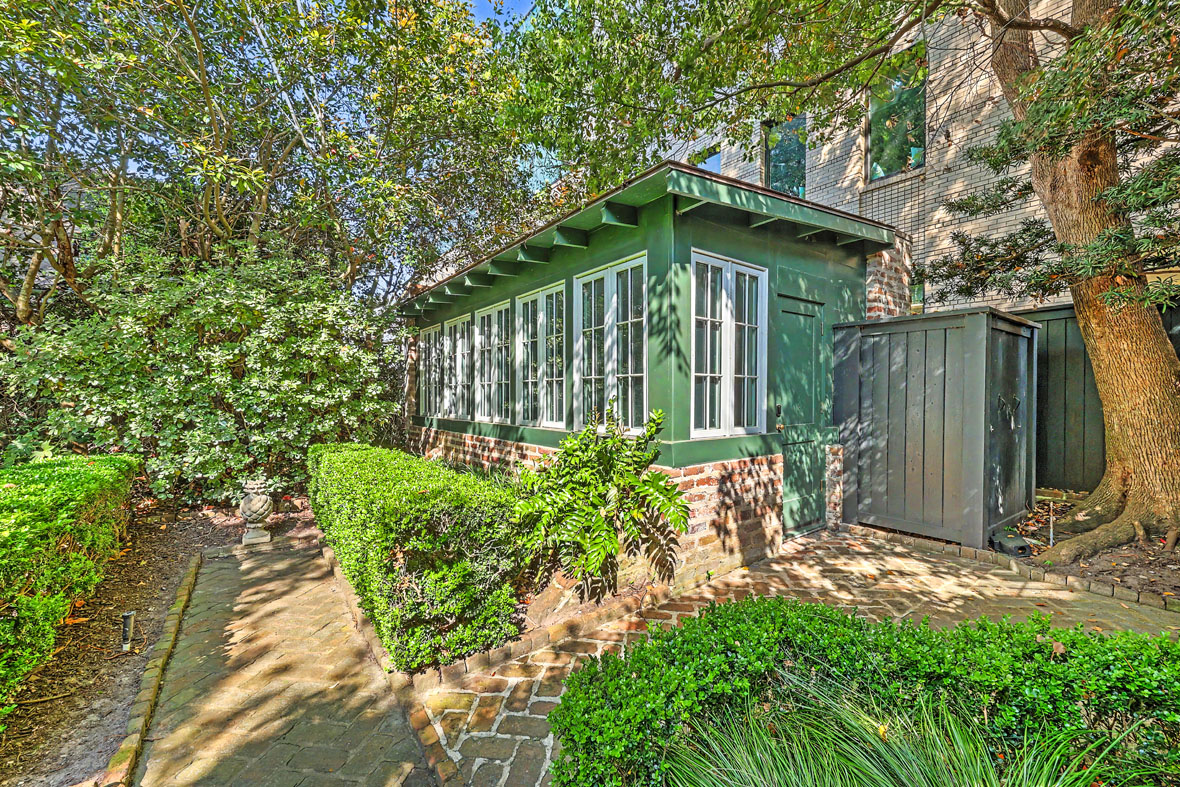
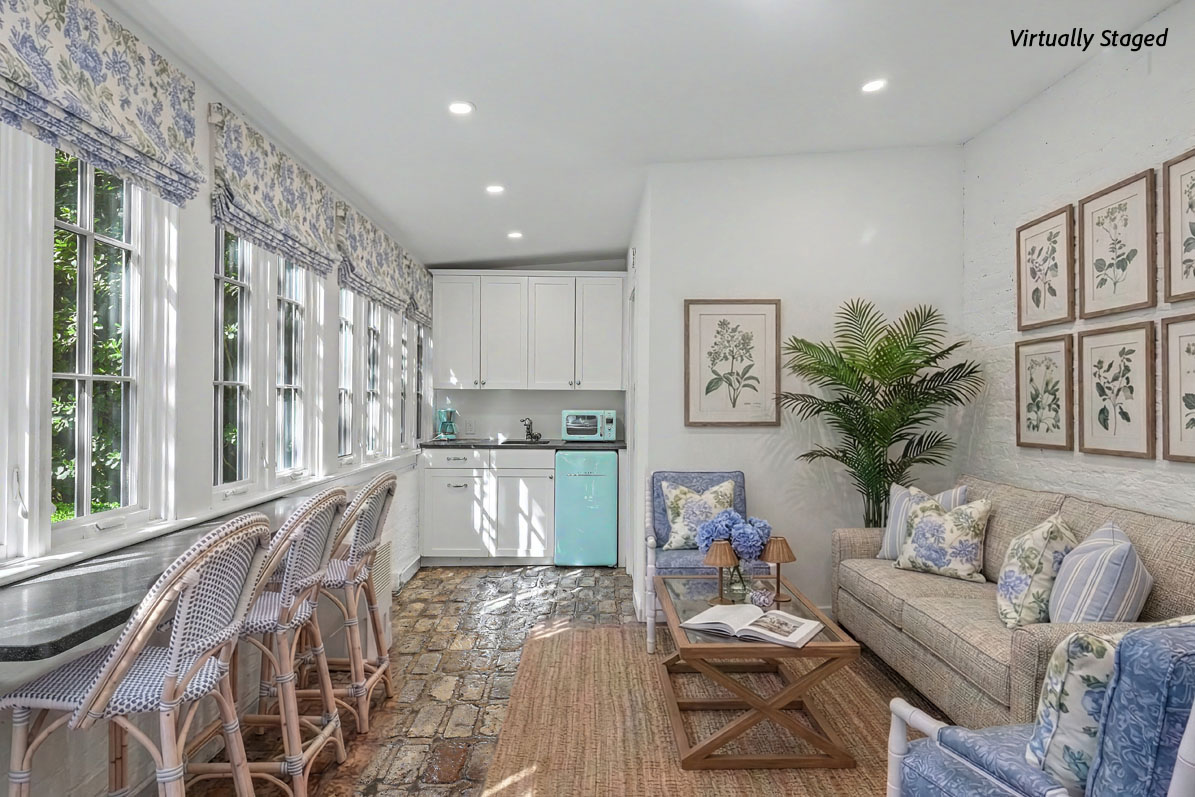
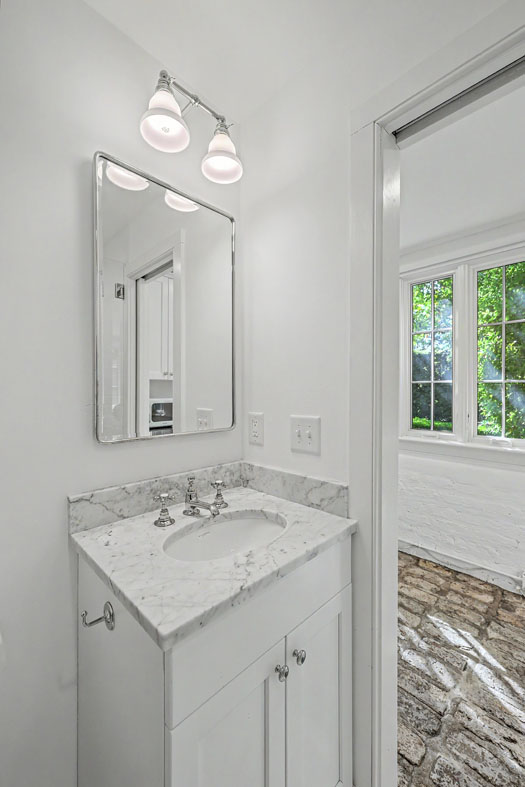
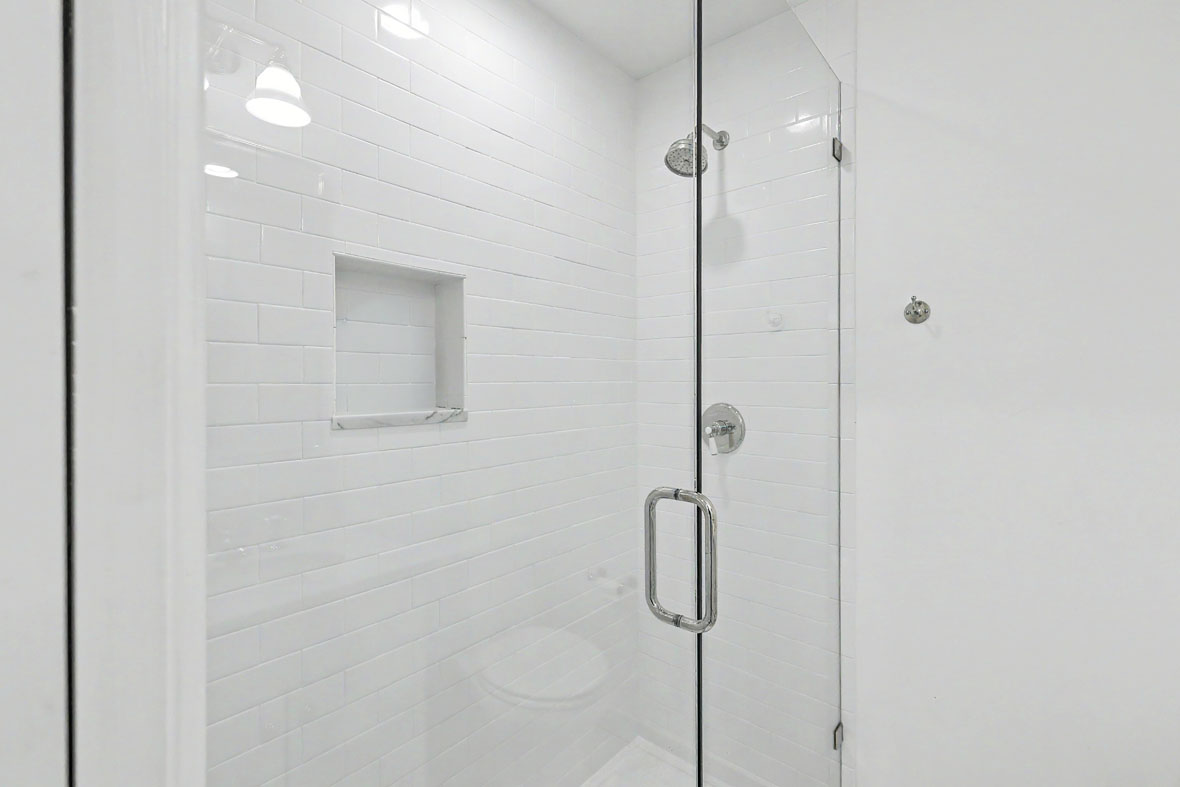
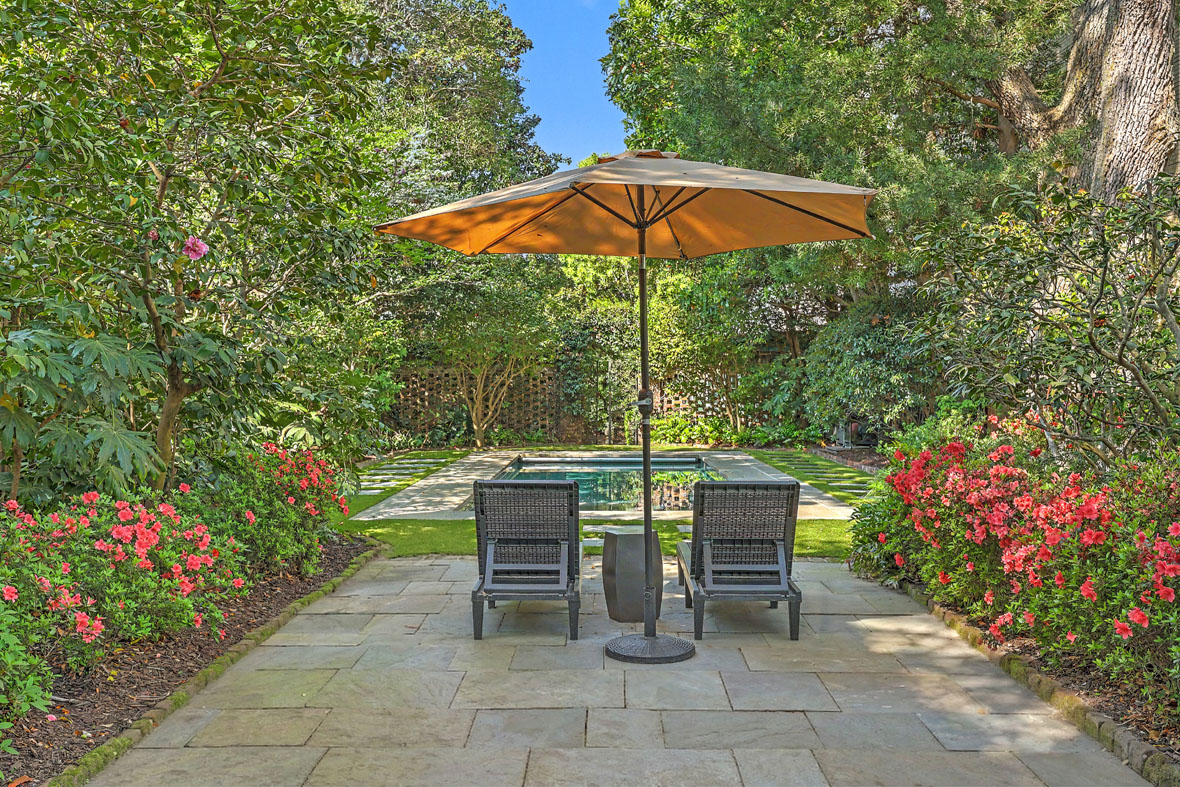
One of the more recent additions to the grounds is a heated and cooled swimming pool and spa with a retractable cover—the perfect place to spend a Lowcountry summer day. Through an iron gate beyond the pool lies a hidden terraced garden and garden house (not included in the square footage) with kitchenette and full bath. It would be an ideal pool house, office, craft studio, another guest suite, or simply a quiet retreat.
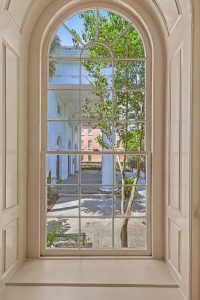
A high stucco and brick wall draped in fig vines encloses the property, creating an extraordinary sense of privacy in the heart of the historic district. The home sits next door to the First Baptist Church of Charleston, providing an exceptional view of its columned portico from the stair hall Palladian window. The church was founded in 1682 as the first in the South and the present structure was built by Robert Mills in 1822. Residents are literally surrounded by history.
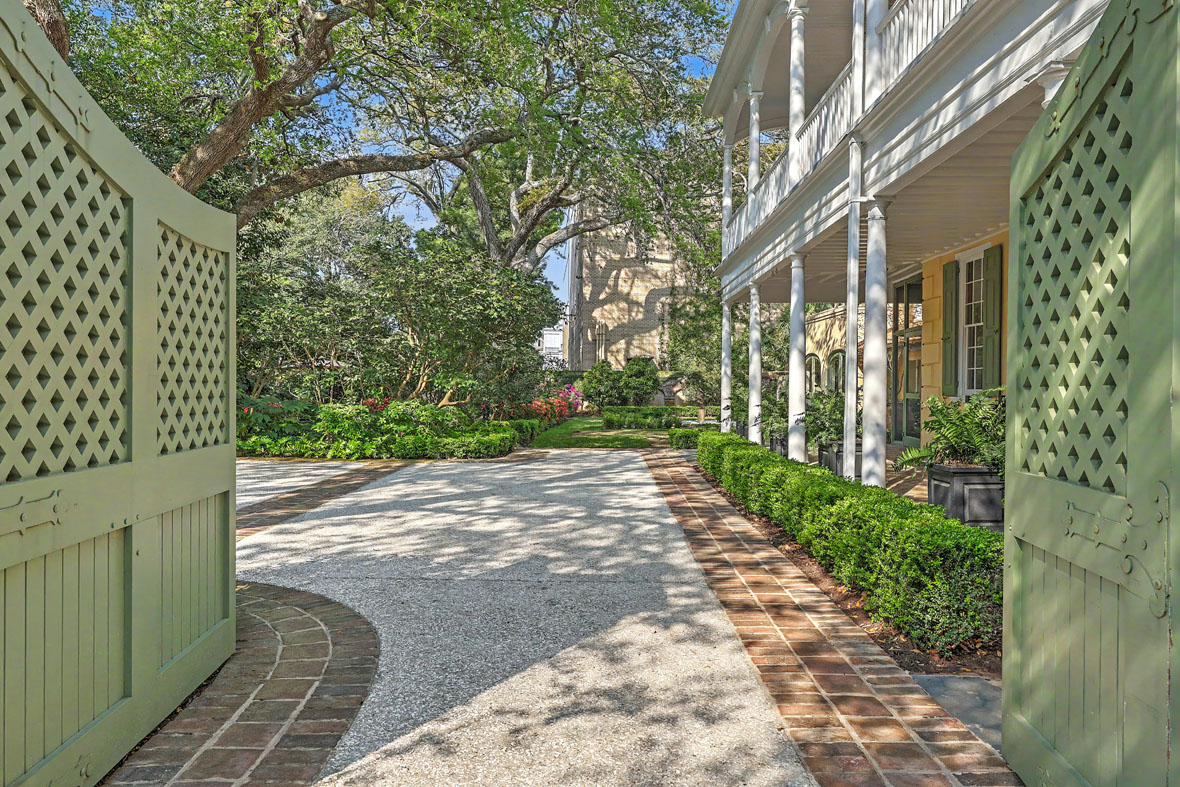
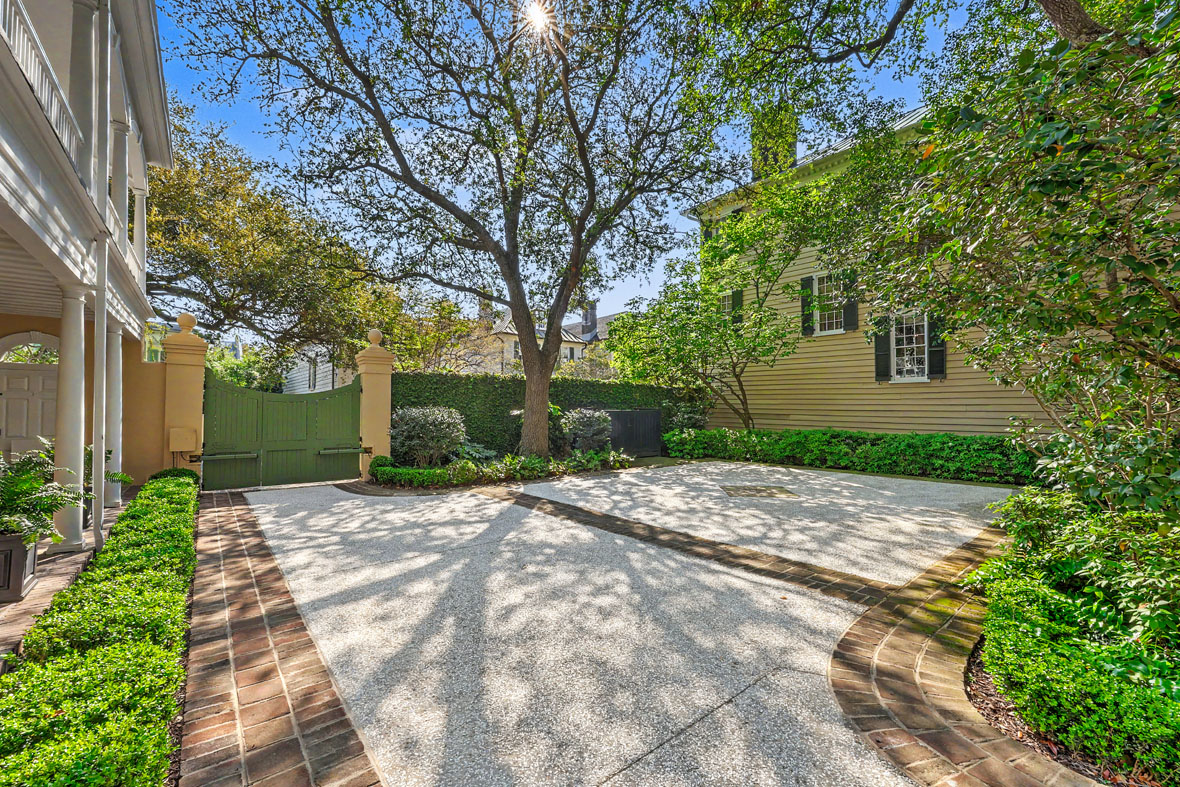
A large brick and stucco parking court behind an automatic mahogany gate provides convenient off-street parking for multiple vehicles, while copper gutters, interior and exterior shutters, and beautifully preserved architectural details complete this exceptional Charleston estate.
Steeped in history.
Immersed in a sense of time and place.
For the next owner, the Thomas Rose House offers something
far more meaningful than a remarkable home:
the opportunity to add your name to the story of
one of Charleston’s most important architectural treasures.
Three centuries of history.
One extraordinary opportunity.
Your legacy awaits…
Church Street is one of the oldest most distinguished addresses in Charleston, dating back to the founding of the walled city itself. It is set within the coveted South of Broad neighborhood, long regarded as the city’s most refined residential enclave. From here, it’s just a short walk to The Battery and White Point Garden, where views of Charleston Harbor and cooling coastal breezes are part of daily life. Rainbow Row, King Street shops, and the French Quarter art galleries are all within easy reach, reinforcing the combination of walkability and cultural richness. Historic landmarks, museums, and both public and private water access join collection of nationally acclaimed restaurants including Husk, 82 Queen, Oak Steakhouse, and Poogan's Porch. Beyond convenience, Church Street offers something far more meaningful: a sense of permanence and pedigree. Surrounded by architecturally significant homes and churches, quiet garden walls, and immediate access to the city’s waterfront, the setting delivers a lifestyle that is at once private, cultured, and deeply rooted in Charleston’s history—an ideal balance for those seeking a lifestyle that is both refined and effortlessly livable.


Monday to Friday: 9:00 am - 5:00 pm
Copyright © 2026 Disher, Hamrick & Myers, Inc. All Rights Reserved.
Website Design by OBS